
Corn tortilla protein estimates: serving counts and size mistakes
Pinned 2026-11-01
Posted 2026-11-01
Posted after the board's automated content and source checks passed on 2026-11-01 · Health notice
In short
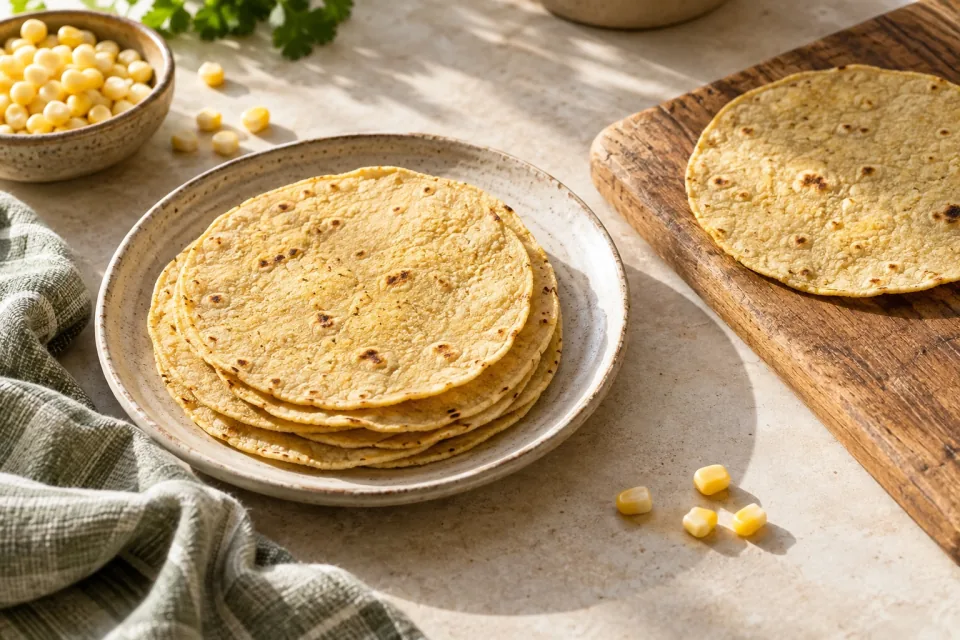
Read corn tortilla serving counts alongside weight, diameter and thickness. Follow the difference between uncooked dough, cooked tortillas, chip wedges and portions of a filled dish.
Sheet 01 of 09
Start with the tortilla weight
- Corn tortilla protein and calorie estimates depend on the amount of tortilla being counted and the food entry used. Record the total serving weight alongside the tortilla count. Keep that weight attached to its preparation state, such as uncooked dough or cooked tortillas.
- A useful portion description identifies the food before attaching nutrition information to it. Write down whether the portion consists of plain tortillas, baked wedges or tortillas assembled with fillings. Then record what the count refers to: whole tortillas, chips, folded quesadillas or cut portions of a layered dish.
- The cooking sources illustrate why these distinctions matter. KQED and Good Food describe dough portions before cooking, while Food Hero describes finished dishes whose pieces are counted after folding, cutting or layering. Those counts describe different stages of preparation. Carrying a count from a recipe into a nutrition entry requires keeping its meaning intact.
- Begin a kitchen record with the tortillas themselves, then add the details of the finished dish separately. This gives the weight, count and preparation their own places in the record. It also makes the next check straightforward: whether the serving described by the nutrition source matches the portion being recorded.
Sheet 02 of 09
Read the serving and package columns
- On U.S. Nutrition Facts labels, the serving description pairs a household measure with a weight in grams, according to the FDA. Read those details together. A count without its accompanying weight leaves part of the serving description behind.
- The FDA explains that nutrition information usually refers to the labeled serving, while a package can hold multiple servings. Some labels also have separate columns for the serving and the entire package. Before copying protein or calories into a food record, identify which column supplies the information and carry over its serving description.
- For tortillas, keep the package count separate from the count named in the serving line. Copy the gram weight beside the serving description rather than taking a weight from elsewhere on the package. If the label has a package column, label that information as applying to the package so it remains distinct from the serving column.
- The FDA also explains that a labeled serving reflects typical consumption rather than a recommendation about how much someone should eat. Here, the serving line is a reference for interpreting the accompanying information. These label conventions concern the United States; when reading a label elsewhere, use the serving basis that the label itself states.
Sheet 03 of 09
Check diameter alongside thickness
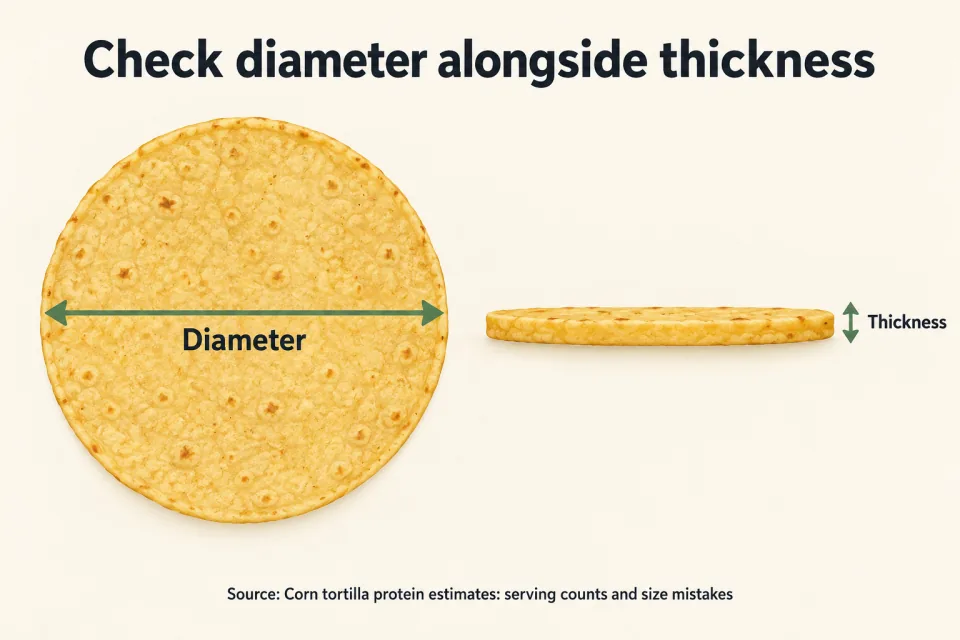
- Diameter, thickness and dough weight are separate measurements in the cited corn tortilla recipes. Record them separately when comparing recipes. A measurement across a tortilla describes its width, while the recipe's dough weight describes the portion used before cooking.
- For each uncooked dough ball, KQED specifies a portion weight before pressing. Its pressing instructions call for a tortilla approximately 5 inches across and one-eighth inch thick. Keep the weight attached to the dough ball when recording this example; the diameter and thickness describe the pressed shape.
- Good Food describes dividing the uncooked dough into 20 equal pieces. It specifies a pressed diameter of 12 centimetres and a thickness of 2 millimetres. These measurements belong to Good Food's preparation method, so retain them together rather than combining its dough weight with dimensions from another recipe.
- The comparison supplies a practical way to read a recipe: identify the dough portion, then the shape it is pressed into, then the cooking method. Avoid assigning a cooked serving weight from diameter alone. The figures above describe recipe specifications, and the weight figures explicitly concern dough.
- When making a comparison sheet, give diameter, thickness and uncooked dough weight separate spaces. Add a space for measured cooked weight if the comparison is intended for nutrition recording. This preserves the distinction between a recipe's instructions for shaping tortillas and the amount of finished tortilla used in a serving.
Sheet 04 of 09
Keep uncooked dough weights separate
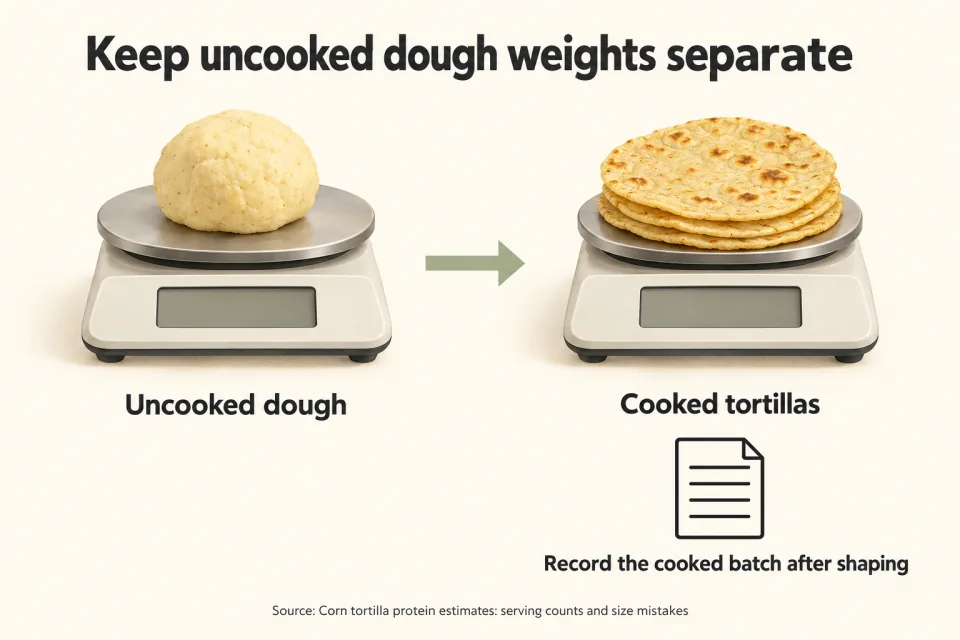
- The dough weights in these recipes belong to the preparation stage before cooking. The Food and Agriculture Organization of the United Nations also places its portion measurement at this stage. In its traditional tortilla example, approximately 50 grams of dough are flattened before cooking on both sides.
- The FAO describes traditional preparation as cooking and steeping maize with lime, then washing and grinding it. It also describes tortilla flour made by drying and sifting ground masa. That flour is mixed with water to form tortilla dough, so the flour and the mixed dough are distinct forms within the preparation sequence.
- Water adjustments appear in KQED's method too. KQED notes that ambient humidity can affect how much water the masa mixture needs. It describes cracked edges as a cue to add water and sticking to the plastic as a cue to add masa harina.
- For a preparation record, note whether a weight was taken before mixing, after mixing or after cooking. If the dough is adjusted, record the adjustment alongside the batch details. This keeps a measured dough portion tied to the mixture that was actually pressed.
- Use the same care when reading a recipe written by someone else. Preserve words such as “dough” and “uncooked” when copying its measurements. Moving the weight into a line labeled “cooked tortilla” would change what the recipe's measurement describes.
Sheet 05 of 09
Record the cooked batch after shaping
- A batch count describes the recipe's yield, while a dough portion describes an earlier preparation step. KQED gives a yield of 18–20 small taco-sized tortillas. Keep that yield beside the recipe name rather than using it as a cooked serving weight.
- The shaping method also deserves a place in the record. Good Food offers rolling dough between parchment sheets and cutting around a template as an alternative to using a tortilla press. It directs cooks to reroll the offcuts and cover the shaped tortillas to prevent drying.
- Good Food cooks the tortillas in a dry nonstick frying pan for approximately one minute on each side. KQED directs cooks to stack cooked tortillas in a kitchen towel so they steam before serving. These instructions describe how each recipe reaches its serving stage; record the method associated with the batch being measured.
- For a kitchen measurement, place an empty container on the scale and reset the display before adding the cooked tortillas. Record their combined weight and the number of whole tortillas included. Label the measurement as cooked tortilla weight, with the recipe or preparation method beside it.
- Keep the uncooked dough measurement in its original place rather than replacing it. The record can then follow the preparation from portioned dough to cooked batch without giving the same measurement a different meaning.
Sheet 06 of 09
Count whole tortillas before counting chip wedges
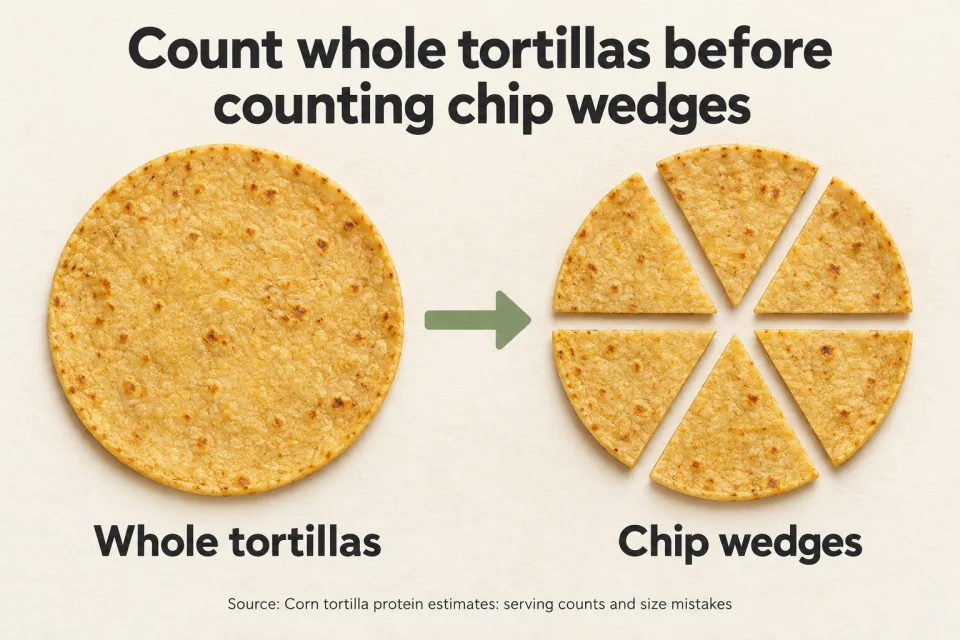
- Chip counts describe cut pieces, so keep the starting tortilla count with them. Food Hero's baked-chip recipe begins with two corn tortillas measuring 6–8 inches across and gives a yield of 16 chips. Its method cuts each tortilla into eight wedges before arranging them in a single layer.
- For a portion record, write down the whole tortillas used before cutting them. Add the chip count after cutting, clearly labeled as wedges. This preserves the connection between the original tortillas and the pieces served, rather than leaving the word “pieces” to cover both.
- Food Hero offers plain chips, chips lightly coated with cooking spray and chips brushed with oil. Record which preparation was used alongside the tortilla count. The choice belongs in the description of the finished chips, especially when the original food entry describes a plain tortilla.
- Keep any weight taken before baking distinct from a weight taken after baking. Label the earlier measurement as the starting tortillas and the later measurement as the finished chips. This makes the preparation stage explicit without relying on the chip count to describe it.
- The useful sequence is to record the starting food, the cutting method and the finished portion. If only part of the batch is served, describe that portion in the finished-chip record while retaining the starting batch details. A wedge count then remains a count of wedges throughout the calculation.
Sheet 07 of 09
Follow the fold in a quesadilla
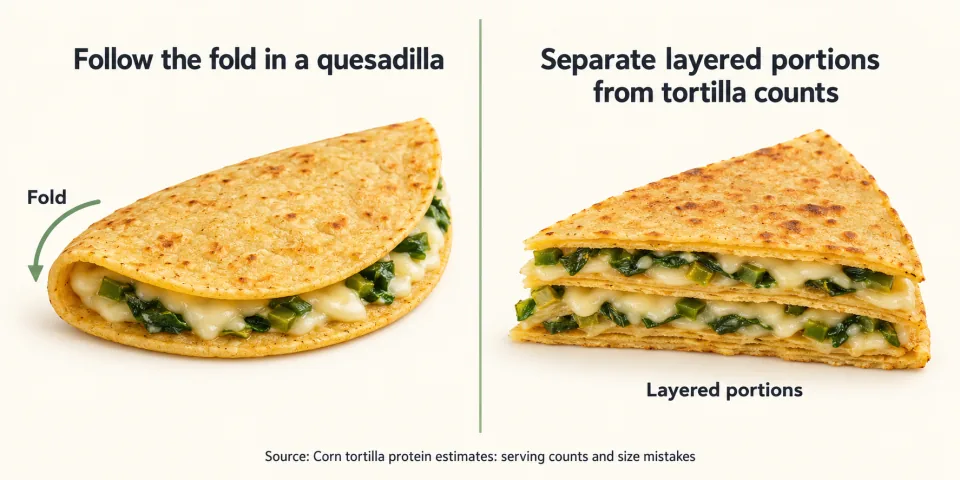
- A folded quesadilla and its cut wedges have different counting units. Food Hero's vegetable quesadilla recipe uses twelve corn tortillas measuring 6 inches across and gives a yield of twelve quesadillas. The method folds each tortilla around filling, cooks it in a dry skillet and then cuts it into wedges.
- Follow that preparation order in the record. Count the whole tortillas as they are filled and folded. After cutting, describe the pieces as quesadilla wedges rather than changing the original tortilla count to match the pieces on the plate.
- The recipe title alone does not explain every stage of assembly. Reading the method shows that the tortilla is folded around the filling before the finished quesadilla is cut. That detail provides the connection between the starting tortilla and the finished food.
- Keep the filling record alongside the tortilla record, with the assembled dish described separately. A weight taken after filling measures the quesadilla as assembled, so label it accordingly. If a tortilla-only estimate is needed, retain the tortilla measurements taken before filling.
- This approach also makes shared dishes easier to describe. Record the batch as folded quesadillas, then record the served portion as wedges from that batch. The names of the counting units carry the preparation history without assuming that every visible piece began as a whole tortilla.
Sheet 08 of 09
Separate layered portions from tortilla counts
- A cut portion of a layered tortilla dish is a portion of the assembled recipe. Food Hero's tofu enchilada recipe uses twelve corn tortillas measuring 5–6 inches across but gives a finished yield of eight pieces. The assembly places the tortillas in two layers of six, with sauce and filling between them.
- Here, the tortilla count belongs to the ingredient stage and the piece count belongs to the finished dish. Keep both descriptions in the record. Replacing the ingredient count with the finished yield would erase the distinction established by the recipe.
- Food Hero also directs cooks to brush both sides of the tortillas with oil before their initial baking. Record that step with the tortilla preparation, then record the sauce and filling with the assembled dish. The finished portion can then be traced back to the recipe rather than described as a plain tortilla serving.
- When recording a cut piece, name it as a portion of the layered enchilada dish. If weighing it, attach the weight to that finished-dish description. Keep the starting tortilla weight or count in the batch record, where it belongs with the other ingredients.
- This differs from the folded quesadilla method because the layered recipe is assembled before being divided into its stated portions. Read the assembly instructions before deciding what a serving count represents. The method explains the relationship that the finished-piece count alone leaves unstated.
Sheet 09 of 09
Match the food entry to the recorded portion
- USDA FoodData Central instructs users to choose the food item that best matches the food being examined. Its help page explains that individual food pages provide nutrient values, portion information and details about how the data were derived. Use those fields together when selecting an entry for a tortilla record.
- Start with the food description and preparation state. Then read the portion information attached to that entry, including its gram basis. Keep the entry's own portion description alongside its protein and calorie information instead of attaching a count from a different recipe.
- For a measured portion, retain the total weight and the whole-tortilla count together. Use the weight to match the amount being described, while keeping diameter and thickness as separate preparation details. This arrangement lets the record distinguish measured serving weight from the shape specified by a recipe.
- For chips or filled dishes, carry forward the additional preparation details. The chip record should say whether the tortillas were plain, sprayed or brushed with oil. The quesadilla or enchilada record should identify the assembled recipe and its finished portions, with the tortilla ingredient recorded separately.
- Finish by reading the portion description as a sentence: name the food, state whether it is uncooked dough or cooked food, and identify what was counted and weighed. Check that the nutrition entry describes that same food and serving basis. The resulting record keeps whole tortillas, wedges and assembled portions distinct while giving the protein and calorie figures a clearly identified amount of food.
Sources for this notice
Serving Size on the Nutrition Facts LabelDIY: Making Homemade Corn Tortillas is Fun and EasyCorn tortillasProcessing of whole maize: lime-cookingBaked Tortilla ChipsVeggie Quesadillas with Cilantro Yogurt DipVegetarian Tofu EnchiladasFoodData Central Help
Desk file
On file for this notice
- Credited to
- Health Protein
- Backed by
- 8 sources listed above
Short notices on the protein in everyday foods from around the world, from dal, paneer and lentils to eggs, fish, yogurt and quinoa. One food per notice, every number sourced.
About this board · How notices are checked · Health notice · People on this board · Expert panel · Privacy notice · Contact the board · Grievances desk