
How to count garden cress seed protein in laddoos
Pinned 2026-10-27
Posted 2026-10-27
Posted after the board's automated content and source checks passed on 2026-10-27 · Health notice
In short
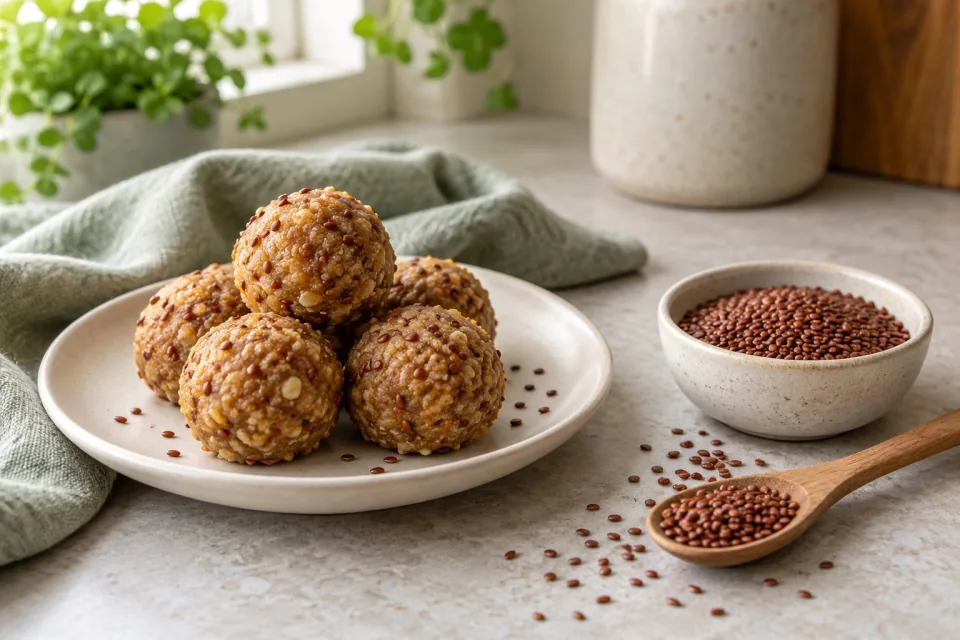
Calculate the seeds' contribution from their weighed amount, a matching composition value and the finished laddoo count. Keep the batch average separate from total laddoo protein.
Sheet 01 of 09
Calculate the seed contribution, then divide by the finished count
- To estimate garden cress seed protein per laddoo, calculate the protein in the seeds used for the batch, then divide that contribution by the actual finished laddoo count. Garden cress seeds are also called halim. The result describes the seeds' contribution to an average piece.
- Start with the weight of the seeds in the same preparation state as the composition entry. Multiply that weight by the entry's protein amount, then divide by the food weight associated with that amount. This follows the portion calculation described in USDA FoodData Central documentation. Keep the food weights in matching units throughout the calculation.
- The finished count belongs at the end of the calculation. FAO's recipe method uses the quantity of prepared food actually obtained, alongside ingredient composition and preparation adjustments. Count the laddoos after shaping, and account for mixture that remains outside those pieces.
- Keep the scope of the answer visible. A seed-only calculation does not include the separate contributions of coconut, semolina, almonds or other ingredients. Write the result as an estimated seed contribution per laddoo, with a note that it is a batch average. A calculation for the whole recipe needs the other ingredients as well.
Sheet 02 of 09
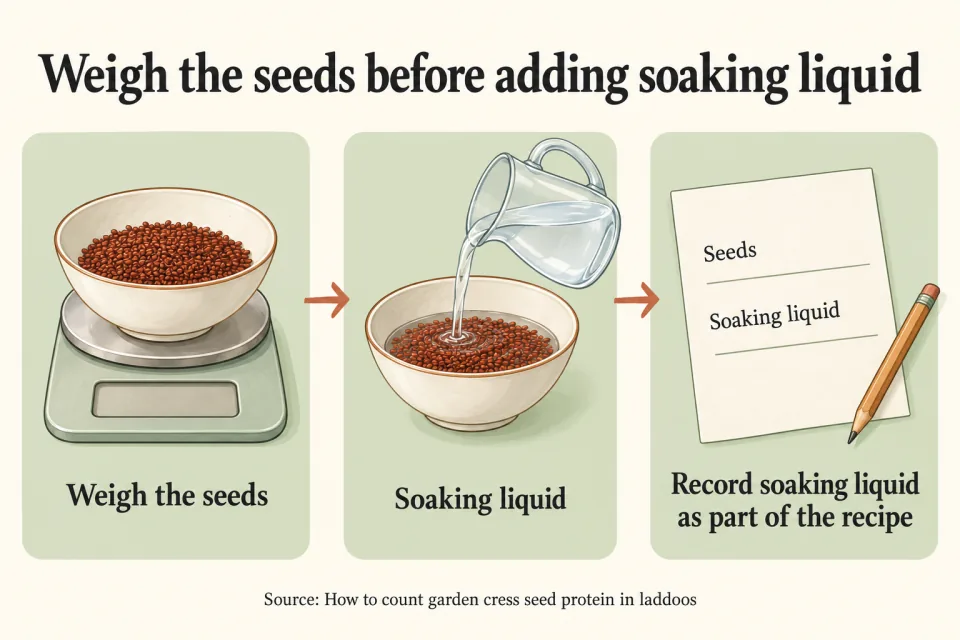
Weigh the seeds before adding soaking liquid
- Weigh the uncooked seeds before soaking when the composition entry describes uncooked seeds. This keeps the measured ingredient aligned with the food described by the source. Record that weight beside the ingredient name before adding liquid or combining the seeds with the rest of the mixture.
- The published laddoo recipes use household cup measures for seeds. USDA FoodData Central documentation explains that household portion weights belong to particular data records and data types. For this calculation, weighing the seeds provides the ingredient weight directly, without requiring a cup-to-weight conversion from another food or another record.
- FAO's recipe method uses the edible amount of an ingredient. If preparation includes removing material before the seeds enter the recipe, record the amount that goes into the mixture. Keep the weighing stage explicit so the batch record distinguishes the starting ingredient from the prepared mixture.
- A useful ingredient record has space for the food name, its preparation state, its measured weight and the composition entry used. Put soaking liquid on its own line. Keeping these entries separate preserves the distinction between the seeds and the liquid added during preparation, which is needed when matching each ingredient to its composition information.
Sheet 03 of 09
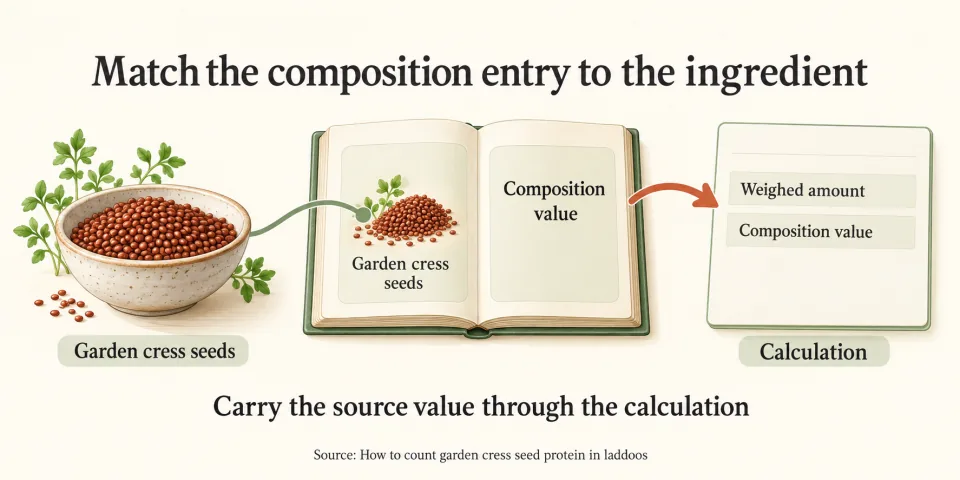
Match the composition entry to the ingredient
- Use a composition entry that identifies garden cress seeds and matches the state in which they were weighed. USDA FoodData Central food descriptions include preparation characteristics, such as whether a food is uncooked or cooked. FAO also calls for clear food names and descriptions so that the ingredient can be identified correctly.
- Read the food description alongside the protein field. Copy the protein amount together with its reference food weight, rather than copying an isolated figure. The reference weight supplies the denominator for the portion calculation. Record the source name with the value so its origin remains attached when the calculation is copied elsewhere.
- USDA FoodData Central distinguishes Foundation Foods from SR Legacy. Foundation Foods includes information about analysed samples and food variation, while SR Legacy draws on historical analyses, calculations and published literature. Keep the data type with the entry details. This records the kind of evidence behind the value without assuming that every entry has the same basis.
- Do not interpret an absent nutrient entry as a measured result; USDA FoodData Central explains that a nutrient may be absent because it has not yet been analysed. For the calculation, use an explicitly reported protein value with its food description and reference weight. Keep the entry details available alongside the batch record so the ingredient match and arithmetic can be checked together.
Sheet 04 of 09
Carry the source value through the calculation
- Scale the composition value to the weighed seed amount before calculating a value per laddoo. The USDA FoodData Central portion method multiplies a nutrient value by the portion weight and divides by the reference food weight. Applied here, the portion is the seed quantity used in the batch.
- Write the calculation in words as seed weight multiplied by listed protein, divided by reference food weight. Give each input its own label. The seed weight comes from the batch record; the listed protein and reference food weight come together from the composition entry. Keeping those origins separate makes an accidental substitution easier to spot.
- The output at this stage is the estimated protein contribution of the seeds entered into the recipe. Carry it forward as the seed subtotal. FAO's method also considers preparation changes and ingredients left on equipment, so distinguish this starting subtotal from an estimate adjusted for the finished food.
- After accounting for the prepared quantity, divide the seed contribution assigned to the shaped batch by the actual laddoo count. Label that output as an average seed contribution per piece. Leave the ingredient subtotal and the division visible in the record, rather than keeping only the final answer. This lets the calculation be followed from the composition entry through to the finished batch.
Sheet 05 of 09
Record soaking liquid as part of the recipe
- Record the soaking liquid separately from the seed weight. The coconut and jaggery recipe offers coconut water or milk as liquid options. The semolina and almond version soaks the seeds in water before cooking. These are different preparation records, even though both recipes use garden cress seeds.
- For the coconut version, the seeds, liquid, fresh coconut and jaggery are mixed and left to stand before cooking. The other version sautés soaked seeds in ghee before adding jaggery and semolina. Writing down the method used connects the ingredient list to the preparation process, as required by FAO's approach to recipe calculation.
- Keep the seed contribution calculation separate from any calculation for the liquid. When calculating the whole laddoo, enter the chosen liquid under its own food description and measured amount. This allows the complete recipe calculation to follow the ingredients actually used, including an alternative liquid where the recipe permits it.
- Record whether liquid remains with the mixture or is removed during preparation. That note belongs with the preparation adjustments and final yield. A record that identifies added and removed material gives the calculation a clearer basis than a seed weight followed only by a finished count.
Sheet 06 of 09
Account for cooking and mixture left behind
- Measure the prepared batch as well as the ingredients. FAO's method includes weighing the dish before and after cooking, with adjustments for preparation changes. It also accounts for ingredients left on utensils and preparation vessels. These measurements connect the starting recipe to the food available for shaping.
- The coconut and jaggery recipe cooks the mixture over low heat while stirring, then shapes it while warm. In the semolina and almond version, coconut and almonds are added before the mixture is moved to a plate, cooled slightly and shaped. The pan, spoon and transfer plate are therefore useful places to check when recording what remains outside the finished laddoos.
- FAO accounts for material left on equipment, so the ingredient total should not automatically be assigned entirely to the shaped laddoos. Record any mixture set aside or left behind as part of the batch calculation. Keep that information beside the finished weight and count so they refer to the same prepared food.
- Cooking adjustments also need to remain distinct from weighing adjustments. FAO uses yield factors for changes in ingredient weight and retention factors for nutrient changes during cooking when uncooked composition data are used. A measured finished weight records the amount obtained; a retention adjustment concerns the nutrient estimate. Label any such adjustment and its basis rather than hiding it inside the arithmetic.
Sheet 07 of 09
Use the count from the batch being calculated
- Count the laddoos actually shaped from the batch whose ingredients were recorded. FAO's recipe method requires the quantity of prepared food obtained before the final composition is expressed. For an average per piece, the finished count supplies the quantity used in the final division.
- Write the count after shaping has ended. Keep it beside the finished batch weight and any record of leftover mixture. If some mixture is held back, state that in the batch record so the seed contribution assigned to the counted pieces corresponds to those pieces.
- The count is especially useful when a recipe describes shaping without fixing a measured finished yield. The coconut and jaggery recipe calls for bite-sized laddoos, while the semolina and almond version also ends with shaping the prepared mixture. For the calculation, replace that descriptive endpoint with the count from the batch being assessed.
- Retain the count even when the final note gives only a per-laddoo estimate. It explains how the batch subtotal was divided. A later batch needs its own finished quantity recorded alongside its ingredients, rather than carrying forward the earlier batch's denominator without checking what was made.
Sheet 08 of 09
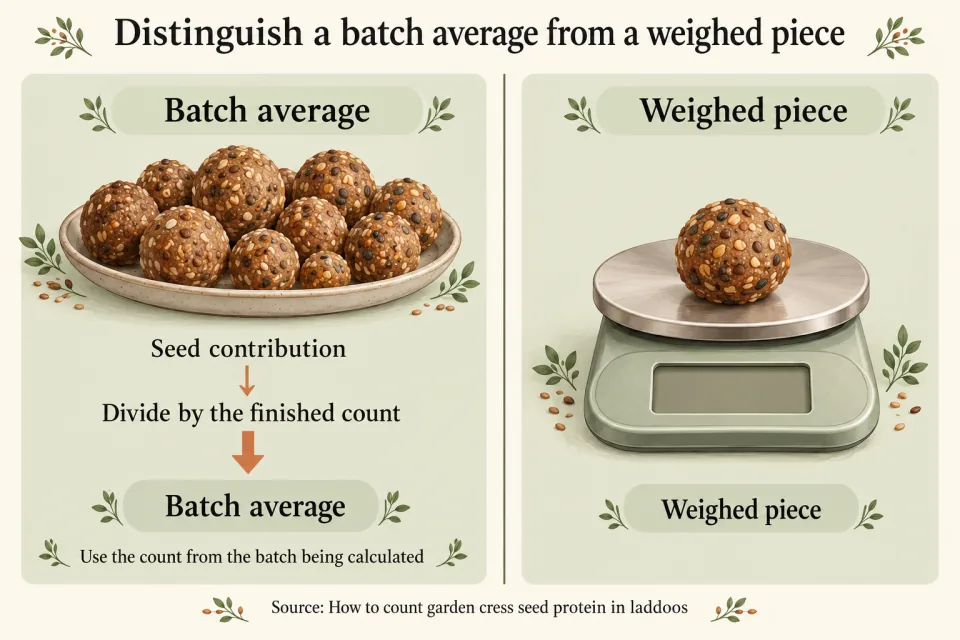
Distinguish a batch average from a weighed piece
- A count-based calculation gives the average seed contribution across the finished laddoos. It allocates the estimated seed subtotal across the recorded count. Keep the word average in the label so the result describes the calculation that was performed.
- A weight-based estimate uses a different denominator. FAO's method expresses finished-food composition by relating the nutrient total to the weight of prepared food. To apply that approach to a particular piece, first relate the seed contribution assigned to the finished batch to the batch's finished weight, then scale it to the weighed laddoo.
- Keep this as a separate calculation from division by count. The count-based version answers how much seed protein is assigned to an average piece across the batch. The weight-based version assigns a share according to the piece's measured weight. Both should retain the same seed contribution and finished-batch record at their starting point.
- FAO describes recipe calculations as estimates because cooking conditions and natural food variation affect their accuracy. A weighed piece should therefore still be described as an estimate derived from the recipe. Recording its weight makes the portion basis clear, but does not turn a composition-table calculation into a direct analysis of that laddoo.
Sheet 09 of 09
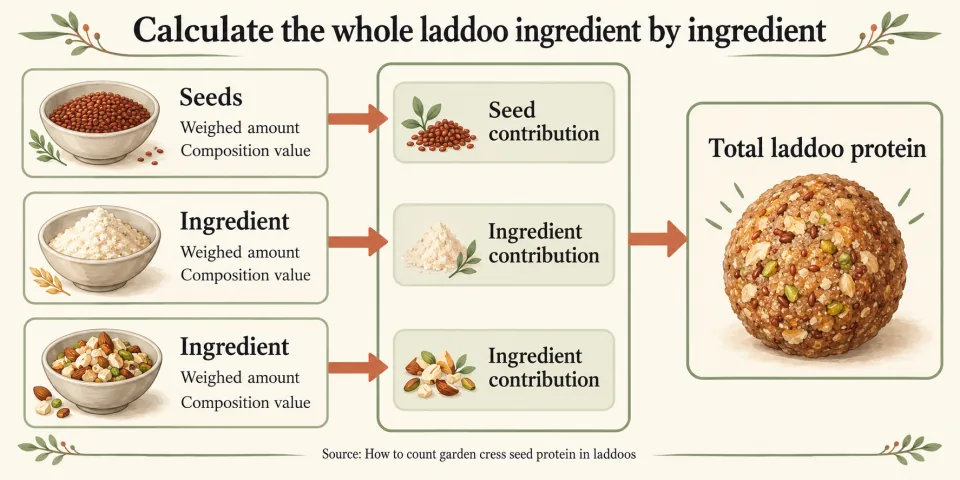
Calculate the whole laddoo ingredient by ingredient
- Total laddoo protein requires a separate calculation for every ingredient. FAO's recipe method adds the nutrient contributions of the ingredients to obtain the recipe total. The garden cress seed subtotal is part of that calculation, with its identity retained until the contributions are combined.
- The coconut and jaggery recipe includes fresh grated coconut and offers alternative liquids and optional additions. The semolina and almond recipe uses desiccated coconut, semolina, powdered almonds, ghee and jaggery alongside the seeds. These ingredient descriptions belong in their respective batch records. Fresh coconut and desiccated coconut should remain separately identified when matching ingredients to composition entries.
- For each ingredient, repeat the same sequence: record its edible weight, match its preparation state, retain the composition entry and scale the listed nutrient amount to the weighed quantity. Then apply the relevant preparation adjustments before combining the contributions. This extends the seed calculation to the whole recipe without changing its basic structure.
- Divide the resulting recipe total by the actual finished count only after the ingredient calculations refer to the same batch. Keep the seed subtotal available as a separate result if that is the question being answered. Label the outputs distinctly as estimated seed protein per laddoo and estimated total protein per laddoo, so the calculation's scope remains clear.
Sources for this notice
Calculation of the composition of dishes prepared from recipesFoundation Foods DocumentationFood Composition Data — Chapter 1FoodData Central Data Type DocumentationAlivache Laadoo — Halim / Haliv / Garden Cress Seeds ladduHow to make protein-rich Halim Laddoos at home
Desk file
On file for this notice
- Credited to
- Health Protein
- Backed by
- 6 sources listed above
Short notices on the protein in everyday foods from around the world, from dal, paneer and lentils to eggs, fish, yogurt and quinoa. One food per notice, every number sourced.
About this board · How notices are checked · Health notice · People on this board · Expert panel · Privacy notice · Contact the board · Grievances desk