How to measure hemp hearts for protein
Pinned 2026-10-28
Posted 2026-10-28
Posted after the board's automated content and source checks passed on 2026-10-28 · Health notice
In short
Weigh hemp hearts, record the spoonful you use, and scale a food reference to that weight. Learn how to handle level measures, shared toppings and recipe changes.
Sheet 01 of 10
Start with the weight of the hemp hearts
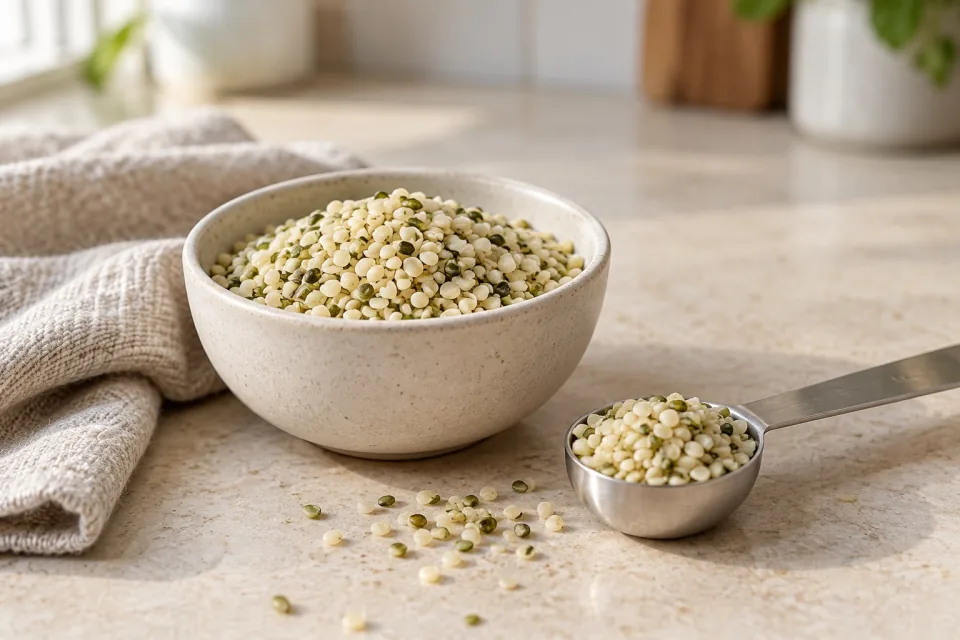
- Measure hemp hearts by weighing them in a tared container, then scale the reference protein amount to the weight measured. A spoon can transfer the seeds into the container. The scale supplies the ingredient weight used in the calculation.
- This separates measuring the food from calculating its protein. The measuring task establishes how much hemp you have added. The calculation then connects that amount to a food reference with a stated weight and protein value. Keep those details together so the result describes the hemp hearts actually measured.
- The BCcampus culinary text identifies weight as a more consistent basis for ingredient measurement than volume. For a recipe written in spoonfuls, its method is to measure the ingredient by volume, weigh it and record that weight. Applied to hemp hearts, this gives a practical route from a familiar kitchen measure to a weight-based calculation.
- Use a short record with space for the food name, spoon measure, measured weight and reference entry. After weighing, add the protein calculation beside those details. This keeps the kitchen measurement attached to the food reference used to interpret it, and makes the method usable again when the amount changes.
Sheet 02 of 10
Match the food reference to hulled seeds
- Hemp hearts are hemp seeds with their hulls removed. Purdue University describes dehulling as cracking the hulls and separating them from the seeds. When choosing a food reference, look for a description that matches hulled hemp seeds and record the food name as it appears there.
- Hemp meal refers to a different stage of processing. Purdue describes meal or cake as the material remaining after hemp seeds are pressed for oil. That material can be used to make protein powder. Keep these names distinct when recording an ingredient or choosing the reference for a calculation.
- Purdue's muffin recipe illustrates the distinction within a dish: hemp meal goes into the batter, while hemp hearts are an optional topping. A recipe that contains hemp therefore still needs an ingredient check. Read which form is used in each part of the recipe before assigning a reference to it.
- Also carry the food's stated preparation through the record. If an entry identifies an uncooked or cooked food, retain that description beside its weight and nutrient value. The useful reference is the complete entry: the named food, its preparation, the amount represented and the nutrient being calculated. The word hemp alone leaves the ingredient description unfinished.
Sheet 03 of 10
Tare the container before adding seeds
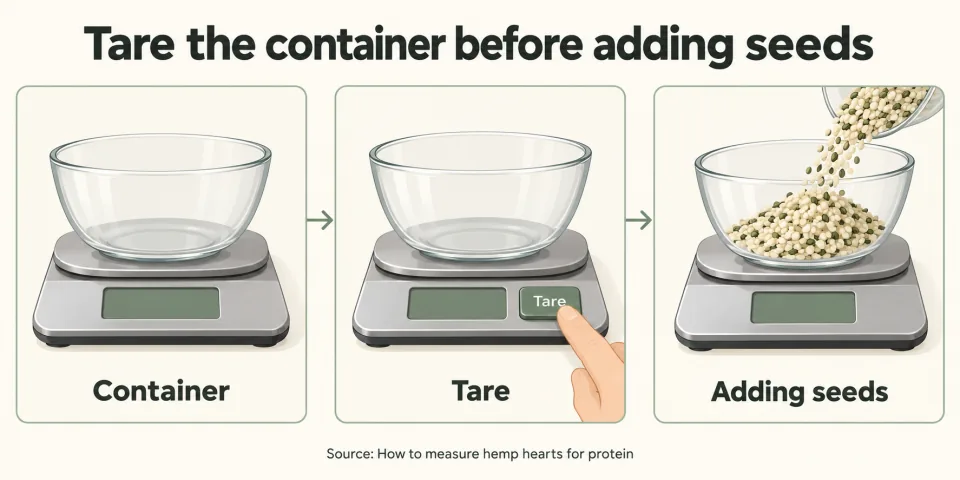
- Place the empty container on the scale and use the tare function before adding hemp hearts. The Culinary Professional describes this sequence as the way to exclude the container's weight from the ingredient measurement. Add the seeds after resetting the display, then record the food weight shown.
- Choose the container according to the task. A small bowl can hold a measured topping before it is transferred to a dish. A larger mixing container can be used when weighing an ingredient for a recipe. In either case, the empty container belongs on the scale before the tare step.
- The textbook defines tare weight as the weight of the container holding the food. Once that weight has been excluded, the displayed measurement represents the food added. This also removes the separate subtraction involved in weighing food and container together and then accounting for the container afterward.
- For a spoonful, complete the tare step before tipping the seeds into the bowl. Read and record the measurement before transferring the seeds elsewhere. For another measurement in an empty container, repeat the same sequence: position the container, tare it, add the hemp hearts and write down the weight. Keeping that order makes the measurement record easy to follow.
Sheet 04 of 10
Describe the spoon measure clearly
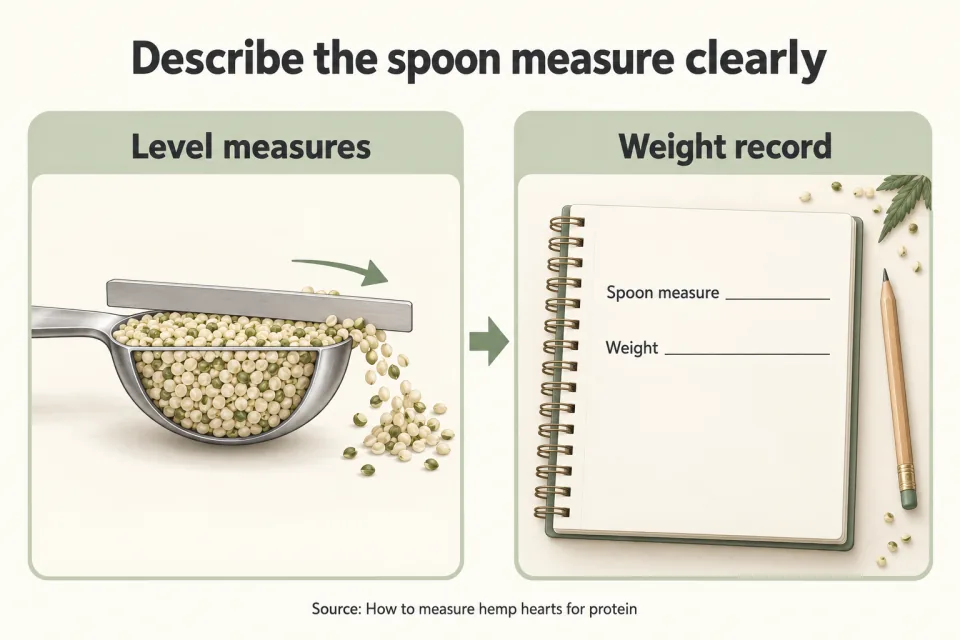
- A spoonful needs a description before it can be used as a repeatable recipe measure. Specify a measuring spoon and whether the seeds are level or heaped. New Mexico State University explains that ordinary household spoons can hold different amounts from standard measuring utensils.
- The distinction also matters across countries. An international metric tablespoon holds 15 millilitres, while an Australian metric tablespoon holds 20 millilitres. A recipe shared internationally can therefore carry the same tablespoon label while referring to a different volume. Recording the measured gram weight gives the ingredient amount a separate, explicit basis.
- A level spoonful reaches the rim, with excess material removed. A heaped spoonful includes seeds above the rim. The amount held in a heap varies with the spoon's shape and the material it contains, so retain the word heaped when describing that measure. Weigh the contents of the spoon used for the calculation.
- For dry measuring cups, University of Illinois Extension describes filling to the top and leveling the contents. It advises against packing, shaking or tapping ordinary dry ingredients during measurement. Mississippi State University Extension describes removing excess with the flat edge of a knife across the rim. These instructions provide a defined filling method when a recipe starts with a dry volume measure.
Sheet 05 of 10
Turn a spoon measure into a weight record
- Fill the intended spoon measure, transfer it to the tared container and record its weight. This applies the BCcampus method for converting a recipe ingredient from volume to weight. Keep the spoon description beside the measurement so the record shows exactly what was weighed.
- For a level measure, write that the contents were level with the rim. For a heaped measure, preserve that description instead. Include whether the utensil was a measuring spoon or an ordinary household spoon. These details distinguish the method used from a bare note that says only spoonful.
- The resulting record connects a particular volume measure with the weight observed during that measurement. Use that weight as the input for the protein calculation. When measuring a different amount, record the new weight before calculating its contribution. The procedure stays the same even when the spoon count or filling style changes.
- For a recipe that will be shared, place the gram weight alongside the original spoon instruction. The BCcampus text recommends measuring, weighing and recording ingredients when converting a volume-based recipe. Keeping both forms lets the recipe retain its familiar kitchen wording while also stating the weight used for calculation. It also leaves a clear record of the conversion instead of an unexplained gram amount.
Sheet 06 of 10
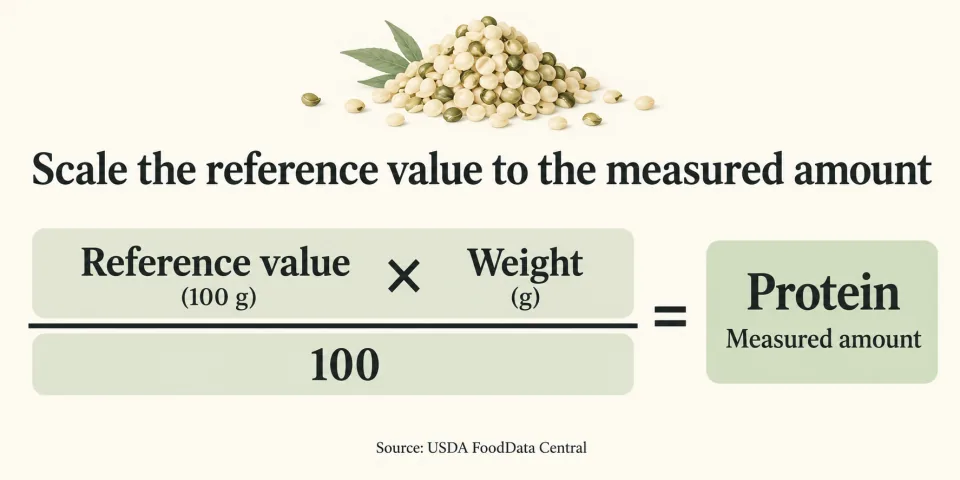
Scale the reference value to the measured amount
- Calculate protein by multiplying the reference protein amount by the measured hemp weight divided by the reference food weight. Use matching weight units for the measured food and the reference food. The resulting ratio expresses the measured portion as a share of the reference portion.
- USDA FoodData Central calculates a portion's nutrient content by multiplying the nutrient value per 100 g by the portion weight in grams, then dividing by 100. The food weight in this calculation is the hemp hearts added after taring. The container has already been excluded during measurement.
- Read the reference in separate parts before doing the arithmetic. Identify the nutrient value, the food weight attached to that value and the preparation described by the entry. Then place the measured hemp weight into the calculation. Write the result as protein per measured amount of hemp hearts, with the source named in the same sentence.
- The same proportional method can be expressed using a stated reference serving. Divide the measured food weight by the reference serving weight, then multiply the reference protein amount by that ratio. Keep the serving's gram weight attached to its protein amount throughout the calculation. A household measure label and a gram weight play different roles: the label describes a portion, while the weight supplies the calculation input.
Sheet 07 of 10
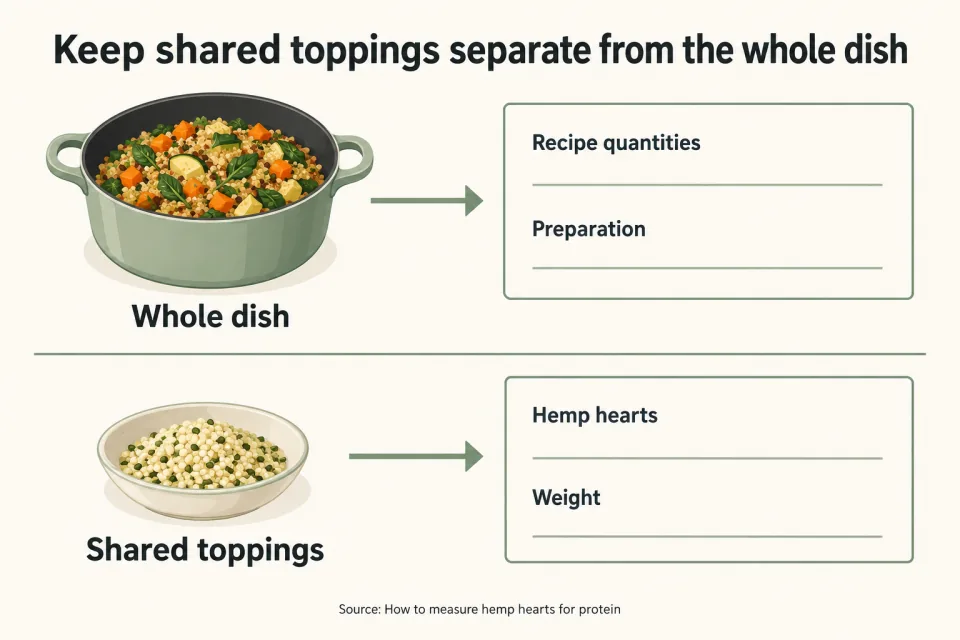
Keep shared toppings separate from the whole dish
- Measure a hemp-heart topping before dividing it among bowls, and keep its calculation separate from the other ingredients. University of Illinois Extension provides a practical example in its yogurt recipe, where hemp hearts and pomegranate arils are added as toppings. The hemp measurement describes the seeds added to the yogurt.
- The University of Illinois Extension recipe divides one tablespoon of hemp hearts between two bowls, with half a tablespoon on each bowl. To express that topping by weight, apply the same measure-and-weigh method to the hemp hearts. Record whether the weight describes the combined topping or the amount placed on a particular bowl.
- For a record organized by bowl, weigh the topping intended for that bowl and calculate its hemp contribution from that weight. For a record organized by recipe, weigh the combined hemp quantity and calculate its contribution to the batch. Label the result accordingly so the calculation and the measured food refer to the same amount.
- Keep the yogurt and pomegranate outside the hemp-only calculation. Their quantities belong in their own ingredient records if the aim is to calculate the complete dish. A useful heading for the topping record is protein from hemp hearts. That wording identifies the ingredient covered without presenting its calculated contribution as the total for everything in the bowl.
Sheet 08 of 10
Scale recipe quantities from a weighed starting point
- Convert the hemp quantity to weight before scaling a recipe when possible. The BCcampus culinary text recommends this order for adjusting ingredient quantities. Start with the original recipe's measured hemp weight, then use the recipe conversion factor to determine the amount for the changed yield.
- The conversion factor is the required yield divided by the original yield. Multiply each original ingredient quantity by that factor to obtain its scaled quantity. For hemp hearts, apply the factor to the recorded ingredient weight and carry the resulting weight into the revised recipe.
- Keep recipe scaling and protein calculation as separate steps in the record. Recipe scaling establishes the hemp quantity for the changed batch. The nutrient calculation then uses the hemp weight and its matching food reference. Writing both operations out makes it possible to follow how the recipe amount became the input for the protein estimate.
- An optional topping deserves its own line in that record. Purdue's muffin recipe distinguishes hemp meal in the batter from optional hemp hearts on top, so record those ingredients separately when adapting it. If the topping amount is chosen during preparation, weigh that amount and use it for the topping calculation. The batter ingredient and the topping then each retain their own food description and quantity.
Sheet 09 of 10
Record the preparation used in cooking
- Keep the preparation method beside the measured hemp quantity. Purdue describes dry-toasting hemp hearts in a stovetop pan or on an oven baking sheet, stirring regularly until lightly golden. Its muffin recipe uses the hearts as an optional topping, separate from the hemp meal in the batter.
- When following that method, write down where weighing occurs in the preparation. A quantity measured before toasting should be identified that way in the recipe record. A quantity measured afterward should carry its own preparation description. This makes the recorded weight understandable when the recipe is read again.
- The food reference should remain attached to the preparation it describes. Copy that description into the calculation record rather than shortening every entry to hemp. Keep any cooking instruction in a separate part of the recipe, where it explains what happens to the measured ingredient.
- For a topping added during cooking, record the hemp hearts separately from the food beneath them. For hemp meal mixed into batter, retain the meal's ingredient name and quantity. Purdue's recipe provides a concrete example of why that distinction belongs in the kitchen record: the forms of hemp appear in different parts of the same preparation. Keeping those parts separate lets the measurement follow the ingredient through the recipe.
Sheet 10 of 10
Read the reference portion in its database context
- Read a food's household portion together with its associated weight and database entry. USDA FoodData Central explains that portions and their weights are specific to its data types. Its Foundation Foods documentation identifies the measure tab and downloadable food-portion files as places where portion information appears.
- That documentation describes portion weights on the basis of edible material without refuse. For hemp hearts, the ingredient identified by Purdue is the seed with its hull removed. Keep that food description visible when matching a measured ingredient with a reference entry and its portion information.
- USDA also explains that nutrient values reflect foods sampled at particular times and places, using the analytical or computational methods available. A calculated portion carries that reference basis with it. Describe the result as calculated from the named food entry, and retain the measured food weight beside it.
- The finished record should allow someone to follow the calculation from ingredient to result. It should show which form of hemp was measured, how the container weight was excluded, what the measured amount was and which reference supplied the nutrient value. For a shared dish, also identify whether that amount belongs to the batch or a particular topping. These details give the protein figure a clear food quantity and context.
Sources for this notice
FoodData Central Foundation Foods DocumentationGrainThe Culinary Professional, 3rd Edition, page 208Imperial and U.S. Systems of MeasurementConverting and Adjusting Recipes and FormulasCooking BasicsIn a Pinch Food YieldsMeasuring Dry or Solid IngredientsTablespoonPomegranate and Hemp Hearts with YogurtHemp MuffinsFoodData Central FAQ
Desk file
On file for this notice
- Credited to
- Health Protein
- Backed by
- 12 sources listed above
Short notices on the protein in everyday foods from around the world, from dal, paneer and lentils to eggs, fish, yogurt and quinoa. One food per notice, every number sourced.
About this board · How notices are checked · Health notice · People on this board · Expert panel · Privacy notice · Contact the board · Grievances desk