
Mahi-mahi protein estimates depend on when the fillet is weighed
Pinned 2026-10-30
Posted 2026-10-30
Posted after the board's automated content and source checks passed on 2026-10-30 · Health notice
In short
An uncooked fillet weight and a cooked fillet weight mean different things in a protein estimate. Learn how to match menu weights with food data and separate edible fish from trim, coatings and the rest of the plate.
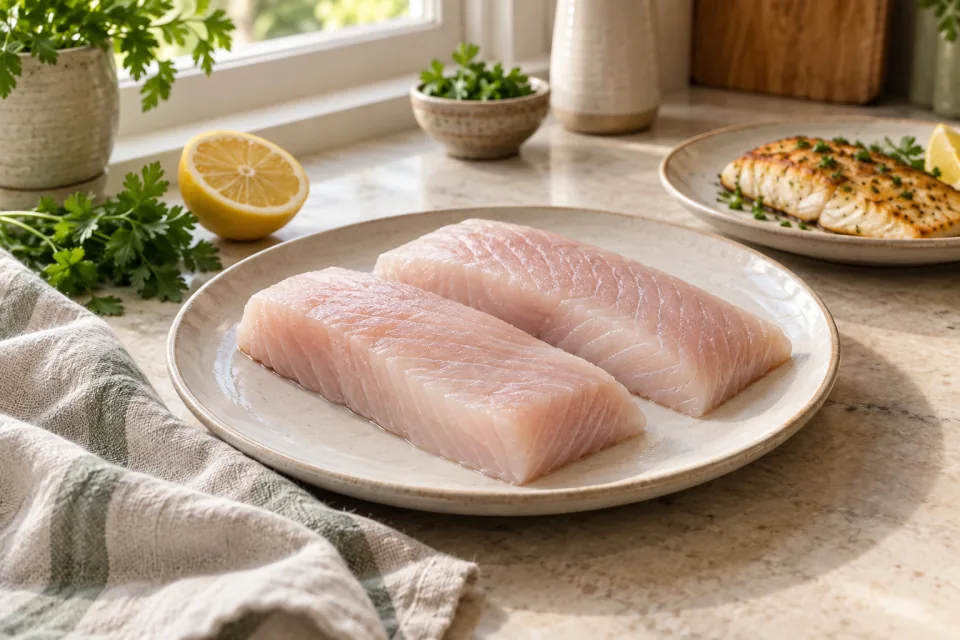
Sheet 01 of 10
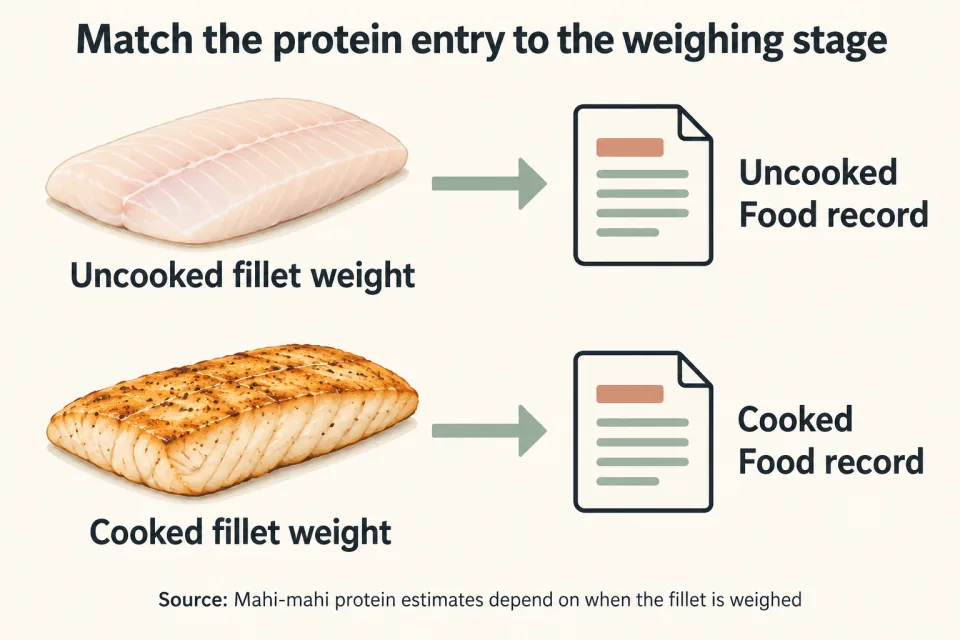
Match the protein entry to the weighing stage
- A mahi-mahi protein estimate needs a fish weight with a clear weighing stage. Match an uncooked weight with uncooked-food data and a cooked weight with cooked-food data. A menu weight without that distinction leaves the calculation open to different interpretations.
- The weighing stage matters because preparation can change food weight through water loss, water gain or fat loss. The food-composition reference published by United Nations University Press explains these changes and their role in recipe calculations. A weight recorded before cooking therefore cannot simply stand in for the finished weight when using cooked-food data.
- Begin with the wording beside the menu portion. Look for a statement that the weight describes the uncooked fillet or the cooked fish. Then establish whether it describes edible flesh alone or includes material removed during preparation. These are separate questions: knowing when a piece was weighed does not establish what was on the scale.
- The useful starting point is a description such as uncooked, trimmed mahi-mahi fillet, followed by its measured weight. That description connects the ingredient, its preparation stage and its edible portion. Protein arithmetic comes after those details have been matched to the food entry.
Sheet 02 of 10
A fillet count does not establish its weight
- The word fillet describes a cut of fish, not a fixed portion weight. North Carolina Sea Grant describes fillets as the sides removed from the backbone, usually without bones. Its portion guide also illustrates how small fillets and portions cut from larger fillets can serve the same number of people.
- That distinction matters when a menu names a mahi-mahi fillet but gives no weight. A fillet count identifies the pieces served; it does not provide the mass needed for a weight-based protein calculation. Describing a piece as small or large leaves the same question unresolved because the description is not a measurement.
- Other fish cuts need their own interpretation. A steak is a crosswise slice from a large fish, according to North Carolina Sea Grant. Dressed fish are prepared for cooking and usually have the head, tail and fins removed. Neither description should be silently substituted for the weight of a trimmed fillet.
- Names can help identify the fish before considering its cut. NOAA Fisheries lists dolphinfish and dorado among the names used for mahi-mahi. If a menu uses a local name, establish that it refers to mahi-mahi, then keep the cut and weighing stage attached to the portion description. Identifying the species is only the beginning of identifying the food being measured.
Sheet 03 of 10
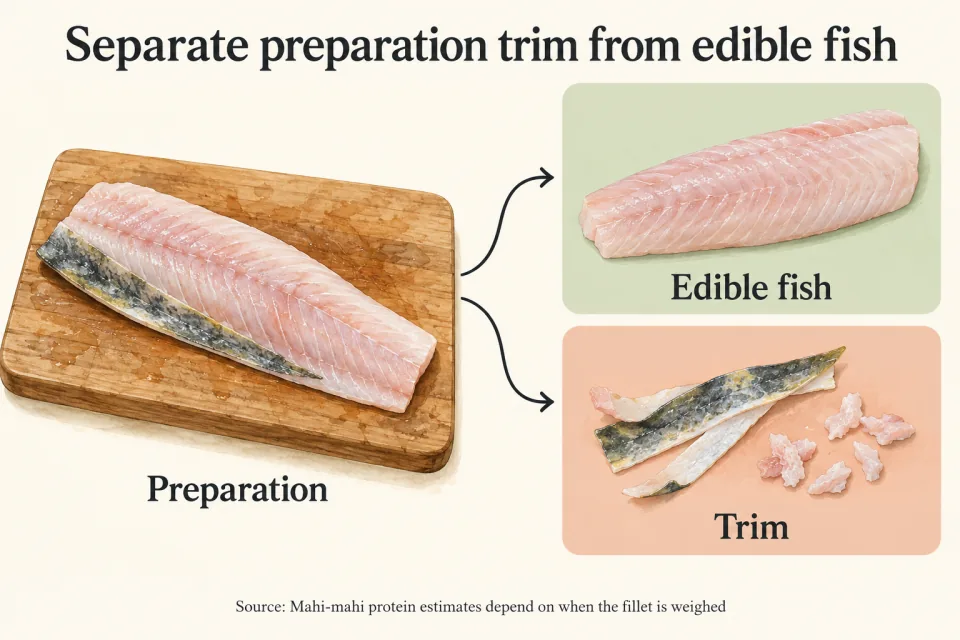
Separate preparation trim from edible fish
- Preparation trim belongs outside the weight used to describe the remaining edible fish. The BCcampus kitchen-management text calculates usable weight by subtracting discarded material from the original weight. This records a preparation change before any cooking change is considered.
- For a kitchen measurement, record the starting fish weight and then weigh the material removed during preparation. Keep those records attached to the same piece or batch. The remainder describes the prepared ingredient at that stage; it does not yet describe how much cooked fish will be served.
- Skin removal is a concrete example of a preparation step that needs a clear place in the record. North Carolina Sea Grant explains how skin can be separated from a fillet by holding it taut and moving a nearly horizontal knife between skin and flesh. If skin is removed after the original weighing, label that original measurement accordingly and record the prepared flesh separately.
- For a restaurant portion, ask whether the stated weight was recorded before or after trimming. A weight described only as uncooked still leaves this distinction open. If the portion was weighed after preparation, record it as the prepared uncooked fish; if it was weighed before preparation, retain the trim information with it. Keeping these stages separate makes the later cooking comparison easier to follow.
Sheet 04 of 10
Cooking changes the weight behind the estimate
- Cooking can change nutrient concentration by changing the amount of water in the food. The United Nations University Press reference explains that when water alone changes, nutrient density changes while the proportions between nutrients remain the same. That condition matters when interpreting a cooked-food entry.
- Imagine following a prepared fillet from its uncooked weighing to its cooked weighing. If the change were entirely water loss, a given weight of the finished fish would contain more of the remaining nutrients than the same weight before cooking. This is an explanation of concentration under a stated condition, rather than a measurement of a particular restaurant fillet.
- Actual preparation can involve more than water loss. The same reference describes water gain and fat loss as other routes to weight change. It also explains that longer uncovered cooking can allow more evaporation than brief cooking or cooking in a tightly covered container. A cooking description therefore helps interpret the final weight.
- A cooking yield factor expresses the prepared weight relative to the unprepared weight. The reference describes these factors as approximate estimates, so a yield factor needs its preparation context. For calculations using cooked-food composition data, the United Nations University Press reference directs analysts to adjust uncooked ingredient weights to cooked weights. Preserve that link between the data and the measured stage throughout the calculation.
Sheet 05 of 10
Read the food record before using its protein value
- The food record must match the fish being estimated before its protein value is useful. USDA FoodData Central Help explains that food-detail pages contain nutrient values, portion information and information about how the data were derived. Read those parts together when selecting an entry.
- Start by checking the food identity and the form described in the record. Then compare that form with the portion description established from the menu or kitchen record. If the weight describes prepared uncooked flesh, keep that stage attached to the search. If it describes cooked fish, carry the cooking description forward as well.
- Portion information requires a separate check. FoodData Central explains that serving measures have different contexts across its data types. A database portion label therefore needs to be read alongside its associated weight and food description. The word serving by itself does not establish that a database portion matches the fish on a restaurant plate.
- Keep the selected record identifiable. USDA FoodData Central assigns an FDC identifier to each food record, and its help page explains that an NDB identifier can locate a food in a specific form. Recording the entry alongside the portion description makes the estimate traceable. Someone examining the calculation can then see which food form and portion information were used, rather than only the final protein estimate.
Sheet 06 of 10
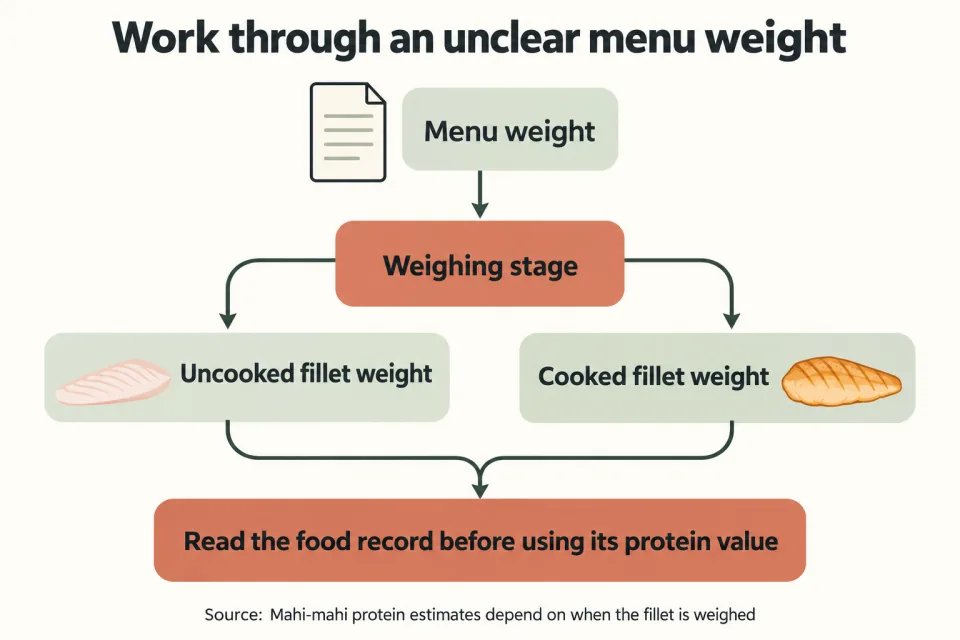
Work through an unclear menu weight
- An unclear menu weight needs clarification before it can support a specific protein estimate. The practical distinction is whether the figure describes prepared uncooked fish, cooked fish or a portion weighed before trimming. Each interpretation points to a different measurement step.
- Suppose the restaurant confirms that its stated weight describes a trimmed fillet before cooking. Record the portion as prepared uncooked mahi-mahi and match it with data for that state. If the calculation instead uses cooked-food data, it also needs the corresponding cooked weight or an appropriate cooking-yield adjustment. Merely changing the name of the entry does not change the weighing stage.
- Now suppose the stated weight describes the cooked fillet. Match that weight with cooked-food data whose preparation description fits the fish. Keep any sauce or coating distinction with the record. This example starts from the finished fish, so returning to an uncooked weight would introduce a separate conversion rather than clarify the measurement already supplied.
- If the menu leaves the stage unstated, ask when the portion was weighed and whether that weight includes trim or additions. Write down the answer in ordinary words beside the menu portion. If comparing possible interpretations, label them as assumptions throughout the comparison. An assumed uncooked weight and an assumed cooked weight are alternative calculations; neither establishes which convention the restaurant used.
Sheet 07 of 10
Keep fish weight separate from the complete dish
- The weight of a complete dish is not the weight of its mahi-mahi flesh. The University of Alaska Fairbanks cooking guide explains that breadings, batters, sauces and cooking fats contribute calories to fish dishes. A calculation for the fish alone and a calculation for the assembled dish therefore describe different things.
- For a coated portion, establish whether the stated weight refers to the fish before coating or to the assembled portion. Keep that distinction explicit even when the fish species and cooking stage are clear. Matching a fish entry to a combined weight would assign the whole measured portion to fish, including the accompanying ingredients.
- Sauce presents a similar bookkeeping question. In a kitchen record, keep the fish measurement separate from the sauce measurement when the aim is to estimate the fish itself. If the aim is to describe the complete dish, retain the ingredients as separate components of that calculation. The definition of the dish should determine which measurements belong in it.
- The same approach applies when cooked fish is served with other foods. Record the edible mahi-mahi portion separately from the rest of the plate, then name the scope of the estimate. A label such as protein estimate for the cooked fish portion tells the reader what was counted. It also leaves the preparation record available for a separate calculation of the complete meal.
Sheet 08 of 10
Use cooking details to interpret the measurement
- Cooking method and fillet thickness help explain a finished weight, but neither replaces weighing. The University of Alaska Fairbanks guide says the thickest part of a fish portion takes longest to cook. It also notes that thicker cuts tend to dry out less during grilling.
- Record those preparation details alongside a cooking-yield measurement. A description that includes the cut and method gives context to the change between uncooked and cooked weight. The United Nations University Press discussion of evaporation also makes covered and uncovered cooking relevant to that record. These details help distinguish preparation conditions that a bare menu weight leaves out.
- The point at which cooking ends also deserves attention in a kitchen comparison. The University of Alaska Fairbanks guide explains that fish continues cooking after removal from the heat. Record when the finished measurement was taken in relation to that step, so that repeated measurements describe the process consistently.
- Appearance has a narrower role. NOAA Fisheries describes uncooked mahi-mahi flesh as pinkish to grayish-white and cooked flesh as off-white. It describes the texture as fairly firm, with large, moist flakes. Those descriptions identify qualities of the fish; use the scale record to establish its weight. A description of colour or texture supplies no measured conversion between an uncooked portion and a cooked portion.
Sheet 09 of 10
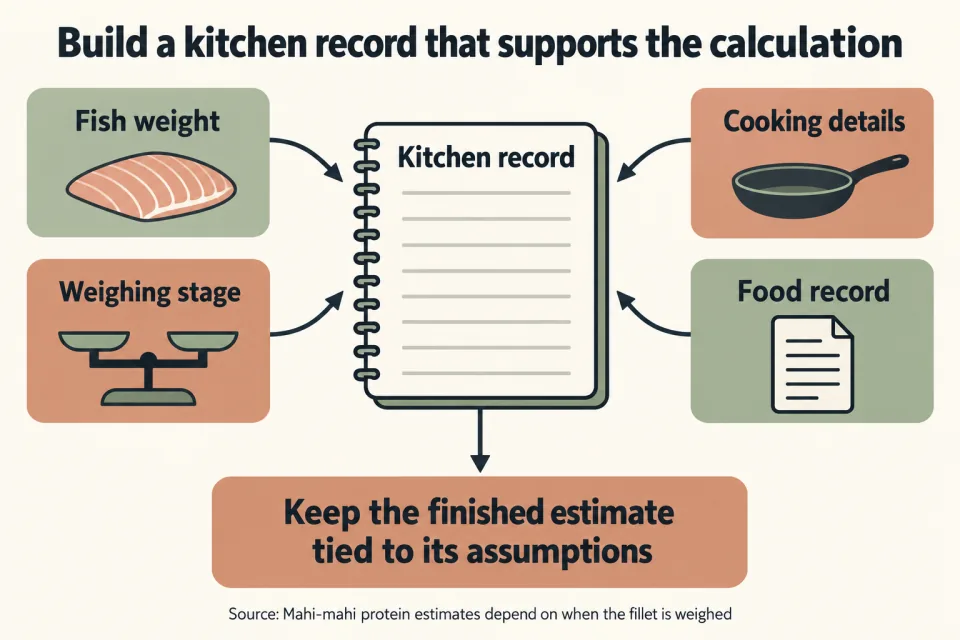
Build a kitchen record that supports the calculation
- A useful kitchen record follows the fish through preparation and cooking without combining the stages. Begin with the original weight, record discarded trim and establish the prepared uncooked weight. Then record the finished edible fish weight with its cooking description.
- BCcampus calls the usable or finished amount remaining after processing the yield. Its method starts with the original weight or volume and records the discarded material during preparation. Apply that sequence to the same piece or batch so that the remaining weight can be traced to its starting measurement.
- For repeated kitchen work, keep the preparation method consistent enough to make the records comparable. The BCcampus text recommends averaging yield tests from several examples of the same item because individual pieces can vary. An average should retain the description of the fish and process behind it. It can then be identified as a measured kitchen yield rather than an unexplained conversion attached to a menu item.
- Finish the record by noting the FoodData Central entry used and whether the estimate concerns fish alone or the complete dish. This connects the weight measurements to the composition data. The record should make it possible to follow the calculation from the original fish through trimming and cooking to the edible portion being described.
Sheet 10 of 10
Keep the finished estimate tied to its assumptions
- A matched food entry gives an estimate for a described portion, not a direct measurement of that particular fillet's composition. USDA FoodData Central describes composition values as snapshots tied to foods, sampling locations, times and analytical or computational methods. The measured portion weight and the database composition value play different roles.
- Fish itself can also vary. The Food and Agriculture Organization reference on fish composition describes differences between individuals of the same species and between parts of an individual fish. Its discussion of water retention explains that prolonged chilled or frozen storage can allow liquid containing dissolved substances to escape as drip. Weight changes therefore need to be interpreted in the context of the fish's preparation and handling.
- For a restaurant estimate, preserve the details that define the calculation: the edible fish weight, its uncooked or cooked state, the preparation description and the food record. If a cooking-yield adjustment was used, keep that assumption visible too. These details let another reader distinguish a measurement supplied by the kitchen from an adjustment made during calculation.
- When a detail changes, update the part of the calculation it affects. A clarified cooked weight changes the weight input; a clarified coating changes what belongs to the fish portion. Keeping those decisions explicit makes the estimate easier to correct without rebuilding it around an assumed menu convention.
Sources for this notice
Atlantic Mahi MahiMarket Forms of Fresh Fish and Cleaning MethodsSeafood: How Much to Buy and ServeYield Testing – Basic Kitchen and Food Service ManagementCompiling Data for Food Composition Data BasesHow to Cook Alaska FishFoodData Central HelpFoodData Central FAQsThe Composition of Fish
Desk file
On file for this notice
- Credited to
- Health Protein
- Backed by
- 9 sources listed above
Short notices on the protein in everyday foods from around the world, from dal, paneer and lentils to eggs, fish, yogurt and quinoa. One food per notice, every number sourced.
About this board · How notices are checked · Health notice · People on this board · Expert panel · Privacy notice · Contact the board · Grievances desk