
Split chickpeas for vegetarian meals: portions and cooking water
Pinned 2026-11-03
Posted 2026-11-03
Posted after the board's automated content and source checks passed on 2026-11-03 · Health notice
In short
How to measure a cooked portion of split chickpeas, account for water and added ingredients, and keep the dal separate from the rest of a meal.
Sheet 01 of 10
What a cooked portion includes
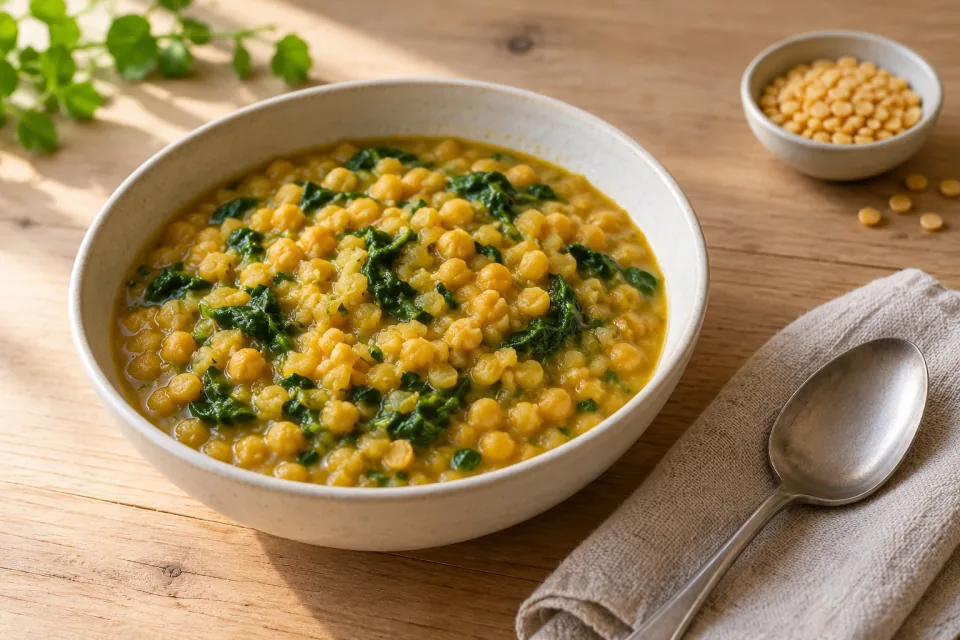
- The protein, fibre and calories attributed to a cooked portion of split chickpeas (chana dal) depend on the ingredients and the finished cooked weight. A portion description also needs to say whether cooking liquid and finishing ingredients are included. These details connect the ingredient record to the food being served.
- For recipe calculations, the Food and Agriculture Organization of the United Nations (FAO) calls for ingredient composition, ingredient weights and cooked yield. Cooked yield is the weight of the completed batch. It provides the basis for assigning part of the batch's calculated nutrient total to a measured portion.
- A dal served with its cooking liquid and a dal drained before seasoning are distinct preparations for this calculation. The recipe's serving count describes how it is divided, while a weighed portion describes the quantity served. Rice or bread alongside the dal belongs in a separate record when the aim is to describe the dal itself.
Sheet 02 of 10
Identify the split chickpeas
- The British Dal Festival's dictionary identifies this dal as split desi, or black, chickpeas. Yellow split peas may look similar, but the dictionary distinguishes them as a different pulse. That distinction belongs in the ingredient description before looking up composition data or recording a recipe.
- Dehulling and splitting describe different preparation steps in the Global Bean Project's cooking guide. Dehulling removes the outer skin. Splitting separates the seed's cotyledons. A record can therefore describe whether the pulse is split and whether its skin has been removed, rather than using a general chickpea label for every form.
- The word dal also has more than an ingredient meaning. The British Dal Festival uses it for split pulses and for soups, stews or similar dishes made from them. In a recipe record, specify whether an entry refers to the uncooked ingredient or the prepared dish. A prepared-dish entry can then include its vegetables, liquid and seasoning, while the ingredient entry identifies the pulse used to make it.
Sheet 03 of 10
Softening and thickening during cooking
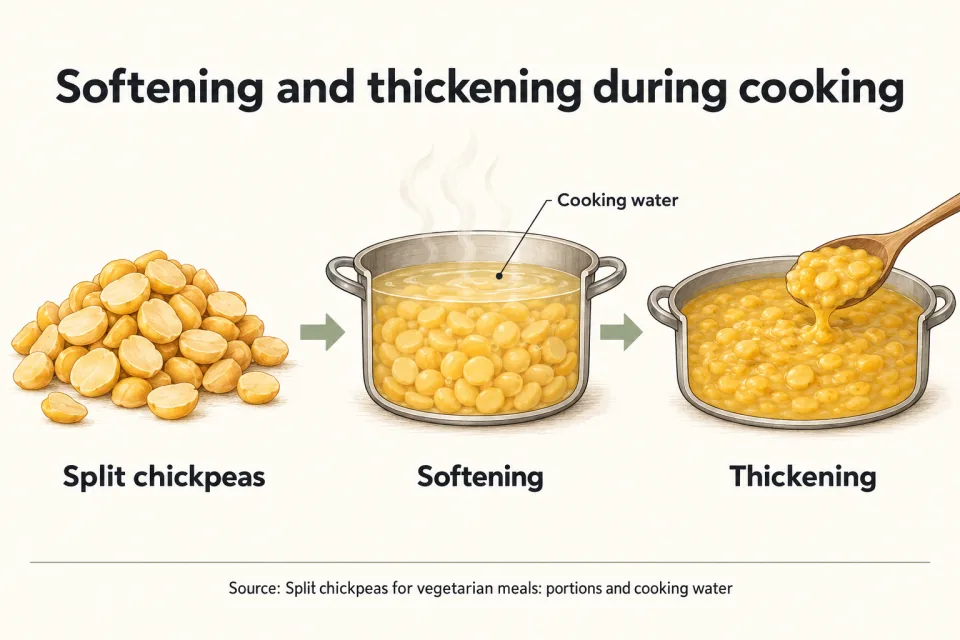
- Cooked pulses can soften further while resting in warm cooking liquid, according to the Global Bean Project. Its guide describes continued hydration during that rest. If the recipe includes such a rest, record the finished dish at the stage at which it will be portioned, including the liquid that remains with it.
- The Global Pulse Confederation's preparation instructions call for rinsing the pulses after debris and discoloured seeds have been removed. Its guidance also identifies older seeds, hard cooking water and high altitude as factors that can lengthen cooking. A cooking record can note these circumstances alongside the method used, without assuming that the same cooking time describes every batch.
- Extended cooking can make pulses break apart and release starch into their surrounding liquid, as the Global Bean guide explains. That starch thickens the liquid. Tender pieces that hold their shape and a preparation with broken-down pulses describe different textures. The recipes below use these texture decisions at different stages, which is why their cooking instructions belong with their ingredient records.
Sheet 04 of 10
Track the liquid that reaches the serving
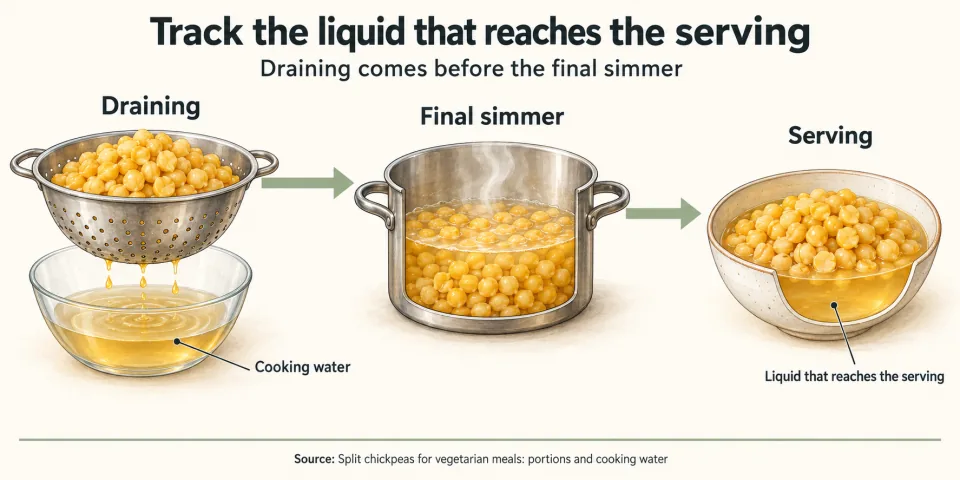
- The finished batch weight includes the liquid served with the dal. Water poured into the saucepan earlier is a cooking input; the final weighing records the prepared dish. Keeping those entries separate follows the FAO distinction between ingredient weights and cooked yield.
- Record whether the recipe keeps its cooking liquid or drains it before another stage. A later addition of water also belongs in the record, even when it is described as an adjustment to consistency. Take the finished weight after that adjustment if it is part of the dish being served. This gives the calculation a defined endpoint rather than a weight taken partway through cooking.
- Mallika Basu's spinach preparation shows why consistency needs its own description. Her method thickens the mixture by mashing dal against the saucepan, and uses hot water when the mixture becomes too dry. Mashing and adding water are different cooking actions, although each changes the consistency. Record which action was used and then weigh the completed preparation; the texture description and the weight provide different information about the same dish.
Sheet 05 of 10
Spinach dal and its separate tempering
- Mallika Basu's vegetarian preparation combines the split chickpeas with tomato, spinach and a separate spice tempering. Her method begins with soaking, followed by rinsing. The dal is softened before the tomato and defrosted spinach are added. That order describes this recipe and gives clear stages for recording its ingredients.
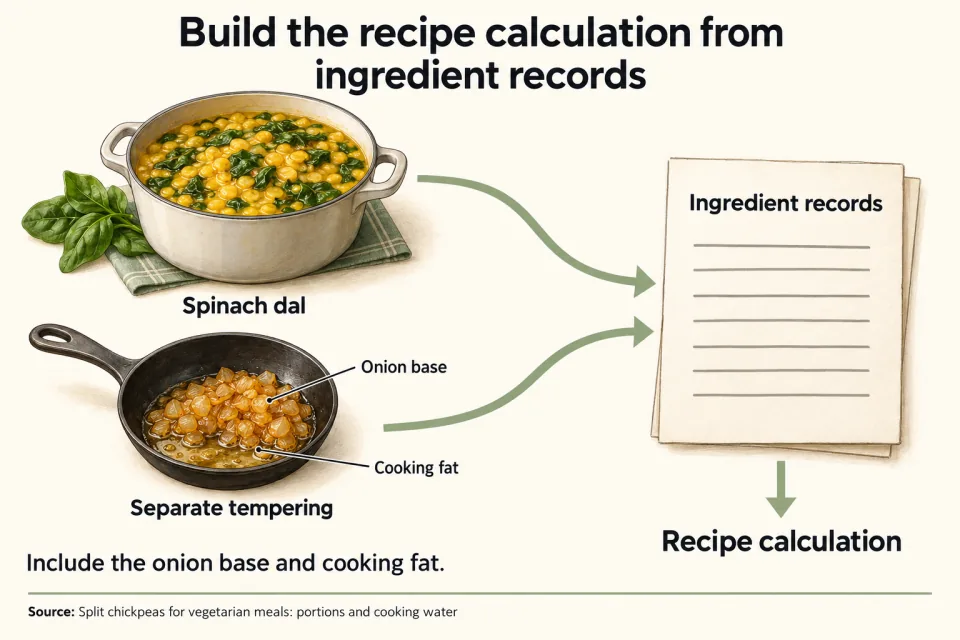
- The finishing tempering, called tadka, uses ghee with dried red chillies, cumin seeds, garlic and chilli powder. Although it is made separately, it belongs to the completed dish. For a recipe calculation, record the ingredients in the tempering pan as well as those in the dal pan. Choose the finished weight after the tempering has been added when the portion being described includes that finish.
- Basu's instructions also separate preparation for freezing from preparation for serving later. Mallika Basu recommends freezing this preparation before adding the tempering, then making the tempering when it is served. A record of that frozen base therefore describes an earlier recipe stage. When calculating the finished dish, carry the base's ingredient record forward and include the newly made tempering, so the description matches the version on the plate.
Sheet 06 of 10
Draining comes before the final simmer
- Sumayya Usmani's preparation drains the initial cooking water before a final simmer with the seasoning mixture. The soaked dal is first boiled until tender while its pieces still hold their shape. The remaining water is then poured away. This drained stage is an intermediate point in the recipe.
- The cooked dal is combined with the seasoning mixture before fresh water is added for a covered simmer. A record of the initial water alone would therefore describe only the earlier cooking stage. Keep the draining step and the later water addition in the method record, then establish the finished weight after the simmer. That sequence identifies which liquid is part of the completed dish.
- The recipe finishes with fresh green chilli, coriander and finely cut ginger. Chaat masala is optional. For the version being recorded, mark that ingredient as included or omitted and include the finishes that were added. Weighing immediately after draining would describe the pulses before these later ingredients and cooking steps; weighing the completed recipe describes the dal that will be portioned.
Sheet 07 of 10
Include the onion base and cooking fat
- The Bangladeshi family preparation published by the British Dal Festival starts by browning onion in vegetable oil. Ginger-garlic paste and the remaining seasoning ingredients follow. The soaked dal is then cooked over medium heat initially, before water is added and cooking continues covered over low heat. Here, the onion and oil belong to the base in which the dal cooks.
- This sequence places cooking fat in a different part of the process from Basu's separate tempering. For the ingredient record, the practical step is the same: include the fat used in the preparation being calculated. Record the onion and seasoning base as part of the recipe, along with the pulse. The cooked yield then refers to the assembled dish after the covered cooking stage.
- FAO explains that a calculation treating cooking weight changes solely as water changes does not account for fat gained or lost. Its distinction matters when describing a recipe with oil or ghee: the water record does not replace the ingredient record. Keep the cooking-fat entry visible through the calculation, including where it was added. This preserves the difference between an adjustment to liquid and an ingredient added to the dish.
Sheet 08 of 10
Build the recipe calculation from ingredient records
- FAO's recipe method starts with ingredient weights adjusted to their edible portions. For a dal calculation, make an entry for each ingredient used in the chosen preparation. Pair that weight with composition data describing the ingredient's recorded form. The recipe record then links what went into the pan with the values used in the calculation.
- Calculate each ingredient's contribution from its recorded weight and matching composition entry. Add those contributions to obtain batch totals after the relevant cooking adjustments. Keep a separate total for each nutrient and for calories, since the portion calculation needs the total for the item being reported.
- State whether a pulse weight is uncooked or cooked. Keep that state attached to its composition entry throughout the calculation, so a cooked ingredient and an uncooked ingredient are not silently exchanged. FAO advises checking compatibility and internal consistency when combining composition values from different sources. Matching the ingredient descriptions is part of carrying out that check.
- The method also distinguishes yield factors from nutrient-retention factors. Yield factors describe changes in ingredient weight during cooking. Retention factors account for nutrient losses or gains when the calculation begins with uncooked ingredient data. These adjustments have different jobs, so a change in cooked weight should remain distinguishable from a change in the nutrient total used for the batch.
- A calculation assembled from ingredient data is a recipe estimate of the prepared dish. It differs from an analytical measurement of the completed food. Keep the ingredient entries and cooking method with the estimate, so the preparation it describes is explicit. A calculation for the spinach recipe, for example, belongs with that recipe's vegetable additions and tempering sequence.
Sheet 09 of 10
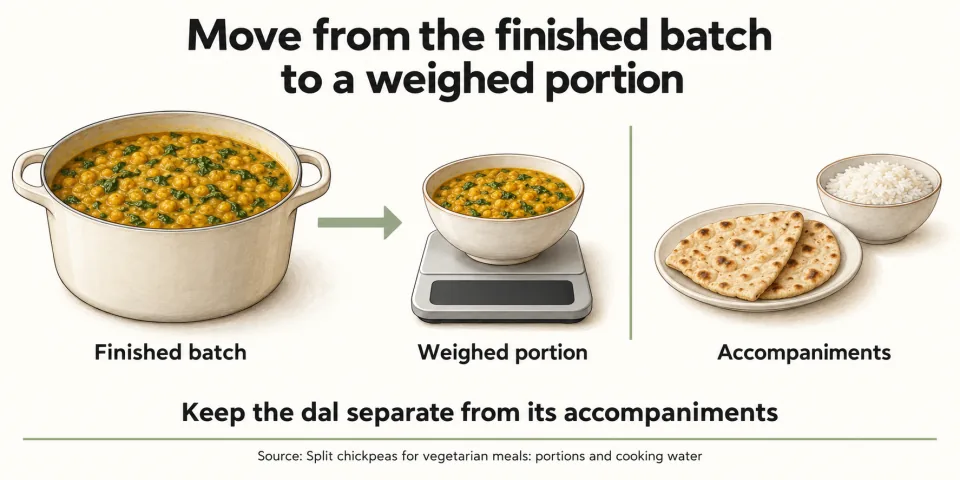
Move from the finished batch to a weighed portion
- FAO's procedure establishes cooked yield by weighing the prepared dish after cooking. A practical way to record the food weight is to weigh its container empty, then subtract that container weight from the weight with the finished dal inside. Use the completed preparation at the chosen serving stage. Keep the weight attached to the ingredient record for that batch.
- FAO's procedure also accounts for food left on preparation utensils and vessels. Record that separately from the food transferred for serving. A pan containing dal, a spoon carrying some of the mixture and the serving container describe different places where the prepared food may remain. The calculation needs to correspond to the food included in the recorded yield.
- For a measured portion, divide its weight by the finished batch weight to find its share of the batch. Apply that share to the calculated batch total for the nutrient being described. The same procedure can be used for protein, fibre or calories, with the appropriate ingredient data and cooking adjustments. The result is an estimated average for that preparation and weighed portion.
- Consider the spinach recipe's hot-water adjustment as a calculation example. If only water is added, with the ingredient nutrient totals held unchanged and the batch retained, the final weight increases. An equal-weight portion then represents a smaller share of those totals. This follows the water-only calculation assumption; additions such as tempering require the ingredient totals to be updated as well.
Sheet 10 of 10
Keep the dal separate from its accompaniments
- Rice, roti and naan appear as serving suggestions for the British Dal Festival's family recipe. The contributing cook also describes serving that Bangladeshi family preparation with paratha at breakfast. These are serving examples from that recipe, rather than a suggested meal or portion. They show how the same named dal can sit within different meals.
- For a record of the dal alone, weigh and describe the dal separately from its accompaniment. For a calculation of the whole meal, include the accompaniment as its own food entry with its own amount and composition data. This extends the FAO ingredient-based method while keeping the boundary of the calculation clear. The description can then say whether the figures belong to the dal or to the assembled meal.
- FAO permits calculated recipe values to be expressed by food weight, volume or serving portion. Choose the basis that matches the record and state it with the estimate. For a portion that was weighed, keep the cooked food weight attached to its calculated values. A volume-based record uses its recorded volume, while a recipe-serving record needs to identify the division of the prepared batch.
Sources for this notice
Dictionary of DalCooking Pulses from Dry SeedsPulses Cooking Times: Citizen ScienceCalculation of the Composition of Dishes Prepared from RecipesQuality Considerations in the Compilation of a Food Composition DatabaseSpinach chana dalLahori chanay ki daalChana Dal
Desk file
On file for this notice
- Credited to
- Health Protein
- Backed by
- 8 sources listed above
Short notices on the protein in everyday foods from around the world, from dal, paneer and lentils to eggs, fish, yogurt and quinoa. One food per notice, every number sourced.
About this board · How notices are checked · Health notice · People on this board · Expert panel · Privacy notice · Contact the board · Grievances desk