
Whole or skimmed milk for protein
Pinned 2026-11-10
Posted 2026-11-10
Posted after the board's automated content and source checks passed on 2026-11-10 · Health notice
In short
How whole and skimmed milk compare for protein, what their fat labels mean, and how to match serving descriptions and consider cooking uses.
Sheet 01 of 10
Protein in whole and skimmed milk
- Whole and skimmed milk contain roughly similar amounts of protein, according to the Dairy Council for Northern Ireland. The Council describes skimmed milk as having less fat than whole milk. It also reports fewer calories in skimmed milk. These are separate parts of the comparison: a change in fat content does not describe the size of a change in protein.
- For a protein comparison, read the protein amount alongside the serving description. Then look at fat and calories in their own entries. This keeps the question about protein separate from a preference for a particular milk fat level, and gives each nutrient its own place in the comparison.
- Milk category names refer to fat content, as the University of Maine Cooperative Extension explains. They do not describe the proportion of every nutrient remaining in the milk. The University of Maine's recipe guide also uses nonfat as another name for skim milk. When comparing information from different countries, match those names before comparing the nutrient entries.
Sheet 02 of 10
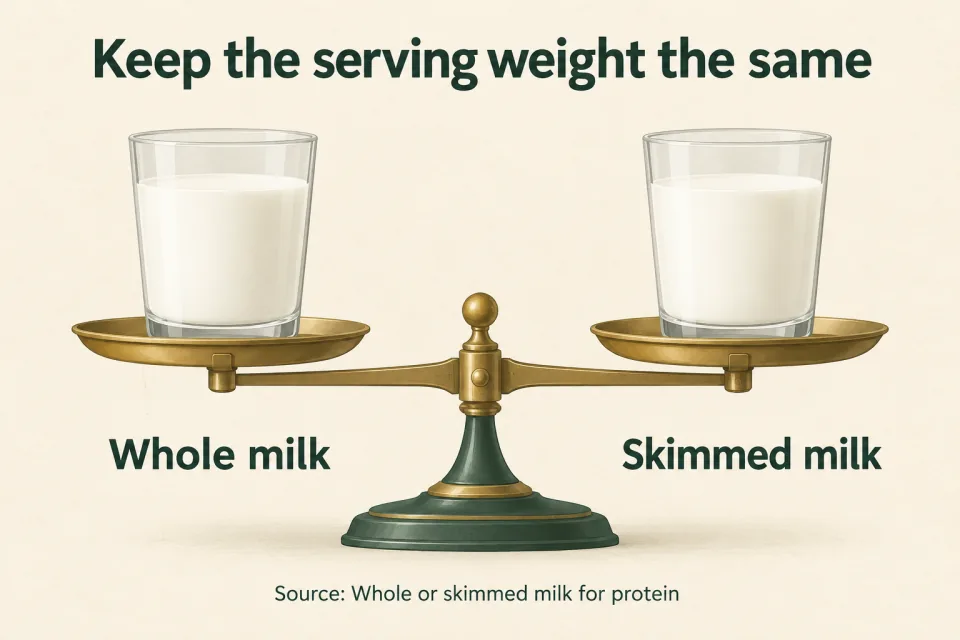
Keep the serving weight the same
- An equal-weight comparison starts with the same stated weight of each milk. Set the descriptions for whole and skimmed milk beside each other, then read the protein, fat and calorie entries attached to that weight. Keep the food form consistent by choosing entries for uncooked liquid milk throughout the comparison.
- Check the serving unit before copying a figure. Grams describe weight, while millilitres and cups describe volume. If a whole milk entry is reported by weight and a skimmed milk entry is reported per cup, select entries with matching units before comparing their nutrient figures.
- Next, keep the milk descriptions as closely matched as possible. Compare plain milk with plain milk, and retain any wording about added vitamins. Record the fat category separately from the serving description. That leaves a clear place for the food name, the amount of milk and each nutrient being compared.
- Read across the protein entries before moving to fat and calories. Each comparison should answer its own question about the same amount of milk. Keep calcium and vitamin information in separate entries rather than using them to stand in for protein.
- For a recipe comparison, use the same approach to the milk ingredient before considering the finished dish. Keep liquid milk entries together, and leave dry or evaporated milk under their own food descriptions. This is a way to organize a comparison; the chosen serving weight describes the food being compared and is not an amount for someone to consume.
Sheet 03 of 10
Why skimmed milk is less creamy
- Skimmed milk's reduced fat content explains its less creamy taste and appearance, according to the Dairy Council for Northern Ireland. The Canadian Dairy Commission also describes skimmed milk as more transparent than whole milk. A slight blue tint is another characteristic it describes.
- The Canadian Dairy Commission attributes milk's opacity to its suspended fat particles, its proteins and certain minerals. Appearance therefore involves more than milk fat alone. When describing a milk, keep observations about colour or creaminess separate from the recorded amount of protein.
- For example, a description of skimmed milk as less creamy is a description of taste and appearance. Use that information when the question concerns how the milk will look or taste. Use the protein entry when the question concerns its protein content.
- For cooking, carry the fat description into the recipe decision as well. The University of Maine Cooperative Extension notes that milk's fat level can affect its suitability for a particular recipe. That gives fat a role in choosing an ingredient even when the main nutrition question concerns protein.
Sheet 04 of 10
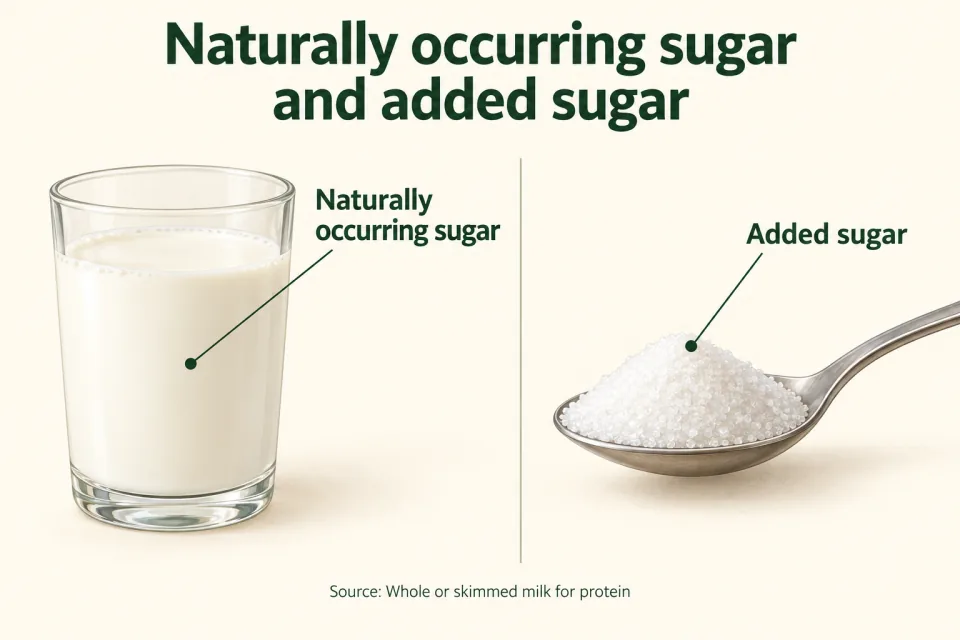
Naturally occurring sugar and added sugar
- Lactose is the naturally occurring sugar in plain milk, as Dairy UK explains. Its sugar content is therefore not simply a description of added sugar. Dairy UK explains that a total-sugars figure includes lactose as well as any sugars that have been added.
- Read the total-sugars entry with that distinction in mind. Keep the word lactose attached to the naturally occurring sugar, and use the ingredient information when considering added sugar. This lets the sugar description remain separate from the fat category on the milk's name.
- Dairy UK reports added sugar in most flavoured milks, with the amount varying between them. For a comparison focused on the effect of milk fat, keep the milk plain throughout. If flavoured milk is the subject instead, include its added-sugar description as a separate part of the comparison.
- The same separation helps when writing down nutrition information. Put protein under protein, total sugars under total sugars, and the fat category beside the milk description. Keep any statement about added sugar distinct from the total-sugars figure. This avoids using a label entry that includes lactose as though it described added sugar alone.
Sheet 05 of 10
Calcium and vitamins alongside protein
- Milk is a natural food source of calcium, according to NIH ODS, the United States NIH Office of Dietary Supplements. NIH ODS also identifies yogurt and cheese as natural calcium sources. For a notice about milk protein, calcium belongs alongside the protein information as a separate nutrient.
- The Dairy Council for Northern Ireland lists iodine, potassium, phosphorus, riboflavin and vitamin B12 among the nutrients in whole, semi-skimmed and skimmed milk. This describes nutrients present across the fat categories. A statement that a nutrient is present is different from a measured comparison of its amount, so retain that distinction when describing the milk.
- Some vitamin A is removed along with milk fat, according to Dairy UK. Keep this fact with the explanation of what changes when milk fat is removed. It concerns vitamin A specifically and should stay separate from statements about protein or calcium.
- NIH ODS describes vitamin D as fat-soluble. Relatively few foods contain vitamin D naturally, NIH ODS explains. NIH ODS reports voluntary vitamin D fortification across almost all of the United States milk supply.
- That fortification statement applies to the United States. When comparing milk information from another country, keep the vitamin details attached to the milk described by that source. Record any stated addition of vitamin D alongside the fat category, so the comparison retains the food's fortification description.
Sheet 06 of 10
Fresh milk and long-life milk
- Dairy UK describes the nutrient content of fresh milk as similar to that of long-life milk. Some B vitamins are present at slightly higher levels in fresh milk. Keep that distinction separate from the comparison between whole and skimmed milk.
- For a comparison focused on fat category, match the fresh or long-life description as well. For example, put fresh whole milk alongside fresh skimmed milk. For a comparison focused on fresh and long-life formats, hold the fat category the same instead. Changing the comparison this way gives each question a clear subject.
- Whole milk can still be processed, as the University of Maine Cooperative Extension explains. Read it as a name for the milk's fat category. If processing is part of the comparison, keep the processing description beside the food name and assess it separately from the protein entry.
Sheet 07 of 10
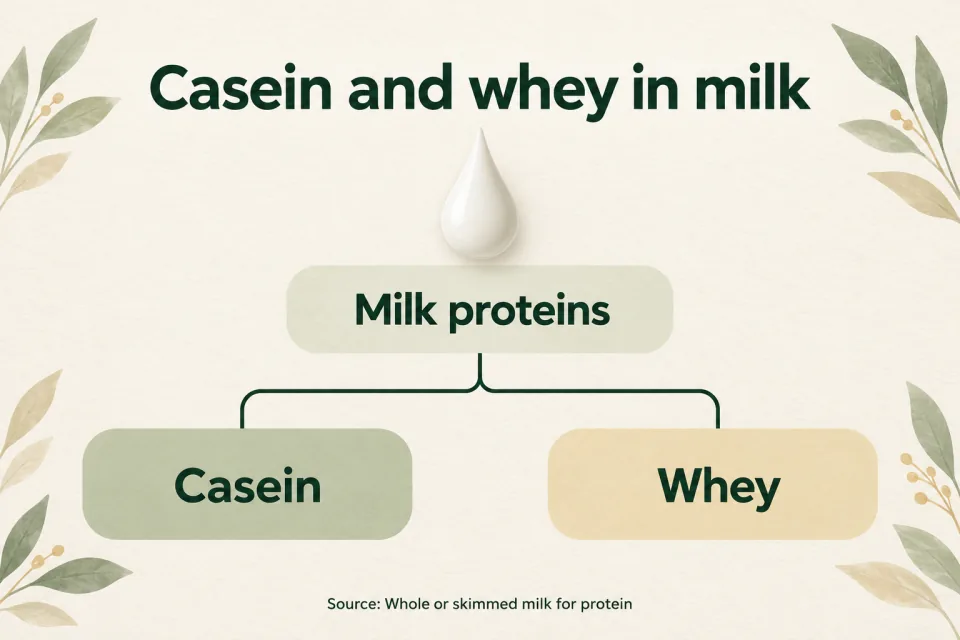
Casein and whey in milk
- The University of Guelph identifies caseins and whey proteins as major groups within milk protein. Casein micelles are suspended particles that contain most of milk's casein proteins. The University describes greater water solubility for whey proteins than for caseins.
- NIH ODS describes amino acids as the components of proteins. It identifies whey as a milk protein containing all the essential amino acids. These descriptions concern the proteins themselves, while whole and skimmed describe milk's fat category.
- The University of Guelph explains that whey proteins can undergo heat denaturation. Limited ordered folding makes caseins resistant to heat denaturation. The response to heat therefore differs between these protein groups.
- For a cooking question, keep those protein properties separate from the amount of protein stated for the milk. A nutrient entry describes how much protein the food contains; the account of casein and whey explains aspects of how milk proteins behave. In a recipe discussion, name the relevant protein property, such as heat response, separately from the food's protein content.
Sheet 08 of 10
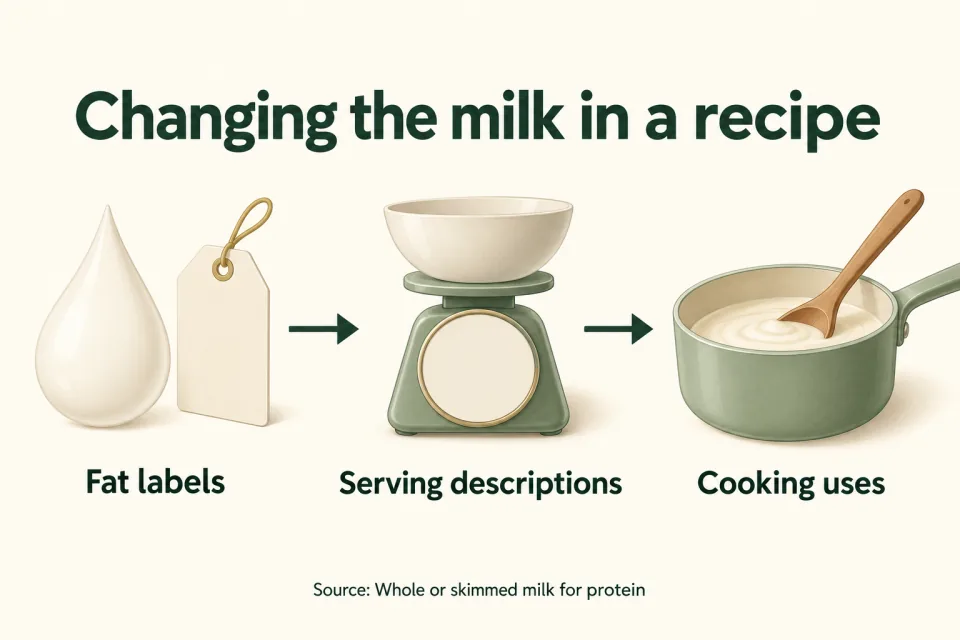
Changing the milk in a recipe
- In most recipes, the University of Maine Cooperative Extension allows whole milk to be replaced with skim milk. The scope of that advice is most recipes, so keep the particular recipe in view when making the substitution. Its guidance on milk types also notes that fat level can affect suitability for a recipe.
- Start with the milk form named in the recipe. Where the recipe calls for liquid whole milk, the suggested substitution is liquid skim milk. Keep the choice of fat category separate from a change to dry milk or evaporated milk, which needs its own substitution guidance.
- Consider the role of the milk in the dish as well as its nutrient entry. The Canadian Dairy Commission attributes some of milk's contribution to richness in cakes to its fat and naturally occurring lactose. For that use, the milk's fat content remains relevant even while protein is being compared separately.
- For example, consider a cake recipe that calls for liquid whole milk. The substitution guidance supports considering skimmed liquid milk, while the account of cake richness gives a reason to include fat in the discussion. Describe the proposed change by naming the milk used, then assess its protein with the matching nutrient entry. Keep the cake's richness as a separate recipe characteristic.
Sheet 09 of 10
What milk proteins do in cooking
- The Canadian Dairy Commission describes milk proteins holding water in beverages, breads and cakes. This water binding is among the roles it identifies for milk proteins. This is a cooking property to consider alongside the milk's fat contribution when deciding how to use it in a recipe.
- The Canadian Dairy Commission also describes milk proteins as helping stabilize fat emulsions in soups, cakes and dressings. Structures formed by milk proteins also contribute to texture in gravies, soups and baked foods. These are distinct roles, so a recipe discussion can identify the relevant role rather than referring vaguely to milk adding richness.
- The University of Guelph describes gelling and whipping properties of native whey proteins. Keep that description attached to whey proteins in their native state. It is a specific account of protein behaviour, separate from the whole or skimmed label on the milk.
- When considering a soup, focus on the documented roles involving emulsions and texture. For bread or cake, include the documented role involving water. This gives a recipe comparison a concrete subject while leaving the protein amount to the nutrition entry for the milk used.
- The Canadian Dairy Commission also describes fluid milk across the range from whole to skimmed being used to make yogurt and other fermented dairy foods. That is another use of milk beyond drinking it or adding it to a baked dish. For a comparison about the milk ingredient, retain the milk's own description.
Sheet 10 of 10
Dry and evaporated milk in recipes
- For cooking and baking, the University of Illinois Extension lists reconstituted nonfat dry milk as an alternative to liquid milk. The form matters: the guidance concerns milk that has been reconstituted. Keep that wording when describing the substitute so it remains distinct from dry milk itself.
- Diluted evaporated milk is another alternative to liquid milk in cooking and baking listed by the University of Illinois Extension. Keep the word diluted attached to this substitution. When planning a recipe change, match the preparation named in the guidance to the ingredient being replaced.
- The University of Maine Cooperative Extension lists evaporated skim milk as an alternative to cream for some recipes. This is a different substitution from replacing whole liquid milk with skimmed liquid milk. It concerns evaporated skim milk and cream, and its scope is some recipes.
- The University of Illinois Extension notes that substitutes suitable for cooking and baking may taste different when drunk. Consider the intended use when choosing which substitution guidance to follow. A description of a cooking substitute does not need to become a promise about its taste as a drink.
- For the nutrient comparison, retain the full name of the milk form used. Put reconstituted milk with its reconstituted description and diluted evaporated milk with its diluted description. Then compare entries using the same stated amount of food. The recipe instructions describe preparation; the nutrient entries describe the ingredient in that prepared form.
Sources for this notice
Types of milkMilk FAQsWhat’s In Your Glass? A Guide to Milk and Plant-Based AlternativesThe Scoop - Fall 2017Calcium: Fact Sheet for Health ProfessionalsVitamin D: Fact Sheet for Health ProfessionalsMilk Proteins: Caseins; Casein Micelles; Whey Proteins; EnzymesBulletin #4167, Altering Recipes for Better HealthRecipe SubstitutionsLiquid Whole Milk
Desk file
On file for this notice
- Credited to
- Health Protein
- Backed by
- 10 sources listed above
Short notices on the protein in everyday foods from around the world, from dal, paneer and lentils to eggs, fish, yogurt and quinoa. One food per notice, every number sourced.
About this board · How notices are checked · Health notice · People on this board · Expert panel · Privacy notice · Contact the board · Grievances desk