
Wholewheat and refined wheat pasta: comparing protein after cooking
Pinned 2026-10-29
Posted 2026-10-29
Posted after the board's automated content and source checks passed on 2026-10-29 · Health notice
In short
How to compare plain cooked pasta at matched weights, account for water absorption, identify wholewheat flour and keep enrichment and added ingredients separate.
Sheet 01 of 08
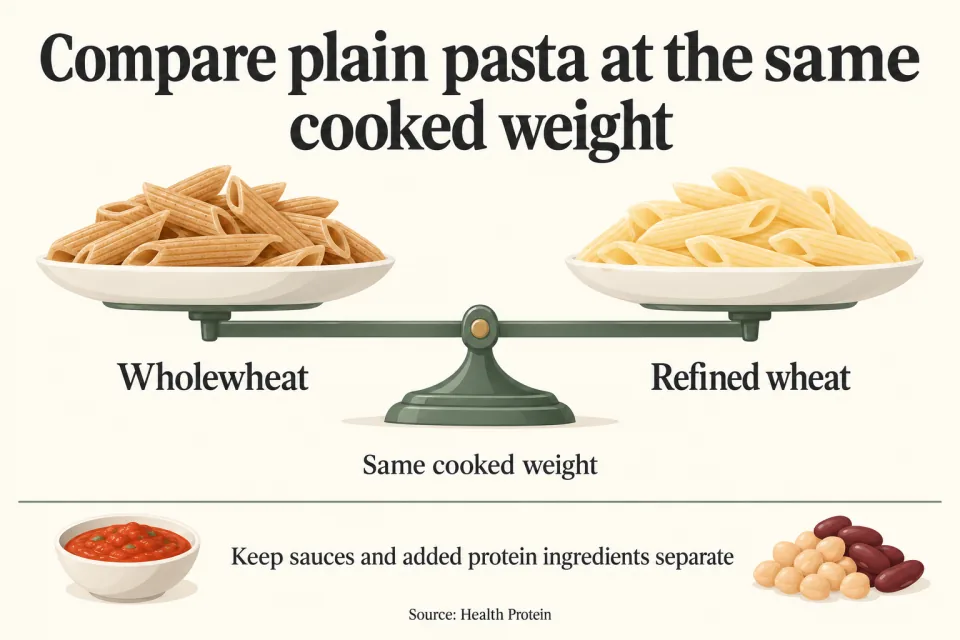
Compare plain pasta at the same cooked weight
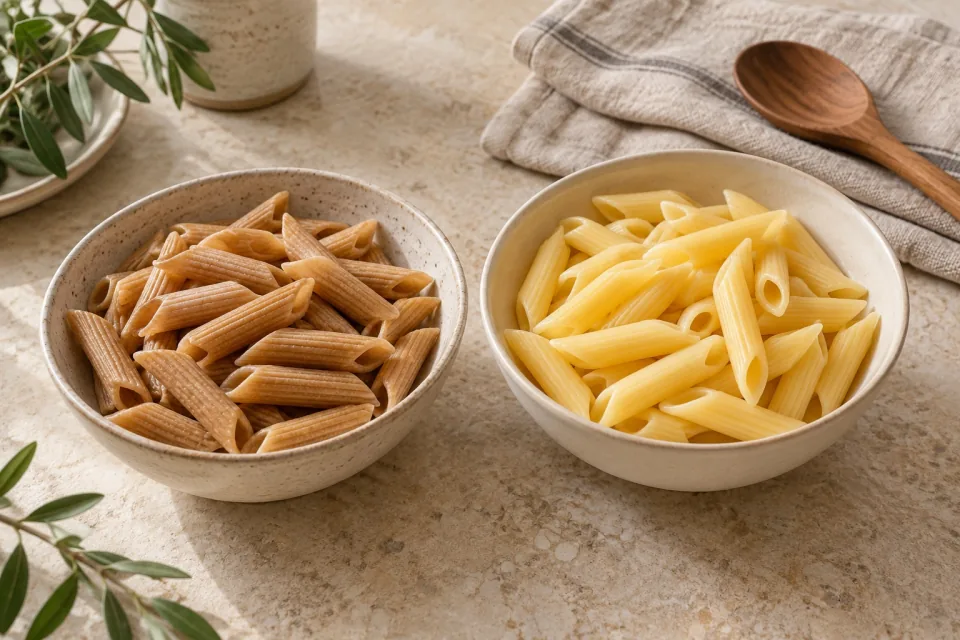
- For a protein comparison, match the weight of plain cooked, drained pasta and identify the flour used. Keep protein, calories and fibre as separate measurements. The ingredient name identifies the pasta, while cooking and draining establish the food being compared.
- Start with a clear description: wholewheat pasta or refined wheat pasta, cooked and drained, without sauce. Use that description throughout the comparison. Pasta with added ingredients belongs in a separate comparison because the question then concerns the assembled dish rather than plain pasta.
- Equal cooked weights and equal starting dry weights describe different comparisons. The Frontiers spaghetti study measured water absorption through the increase in pasta weight during cooking. A comparison beginning with dry pasta therefore needs a record of the cooked yield before it can describe matched cooked portions.
- For a practical comparison, record the dry pasta, cook it, drain it and weigh the cooked batch. Then set aside matching cooked weights of each type. Keep the batch record alongside the portions so that the amount prepared and the amount being compared remain clear.
- Use separate entries for protein, calories and fibre when organising nutrition information. This keeps the question about protein distinct from the question about fibre. It also makes the preparation state part of the comparison instead of leaving it implicit.
Sheet 02 of 08
Identify the flour behind the pasta name
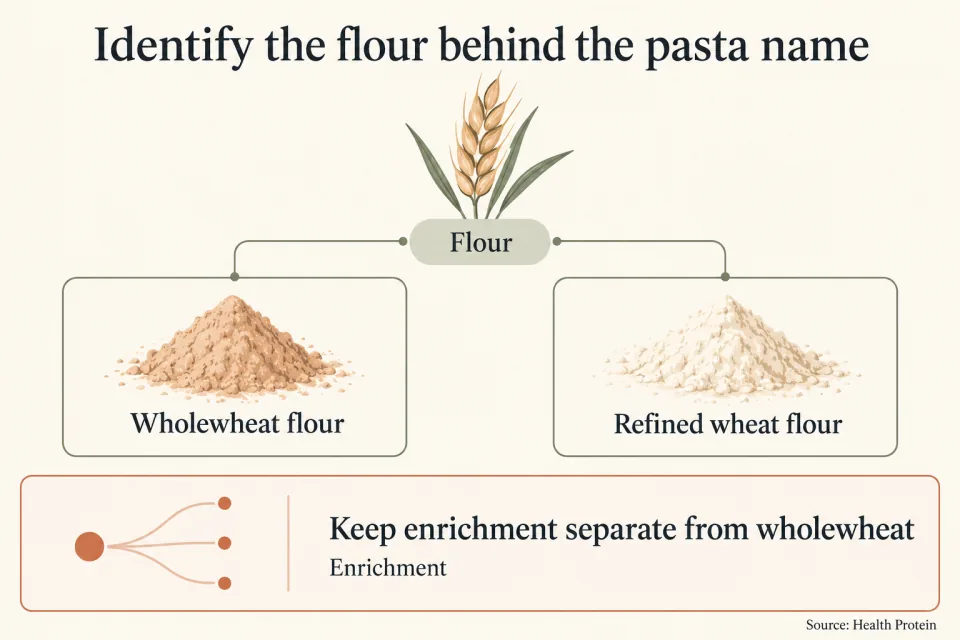
- Wholewheat describes flour that retains the grain's bran, germ and endosperm. New Mexico State University explains that refining removes the bran and germ. These terms describe which parts of the grain remain after processing.
- Traditional pasta uses semolina, which Dietitians of Canada identifies as a wheat flour. When comparing pasta, record the flour description rather than relying on the shape or the recipe name. Keep the distinction between wholewheat and refined wheat visible in the ingredient notes.
- Iowa State University advises checking whether whole-grain or whole-wheat flour appears first in the ingredient list when identifying whole-grain pasta. New Mexico State University explains that ingredients appear in descending order by amount. Reading the flour name together with its position gives a more specific description than a broad grain label.
- New Mexico State University also notes that terms such as multigrain and all-bran do not necessarily identify a whole-grain food. Montana State University makes a related distinction: a food described as high in fibre is not necessarily whole grain. Record the ingredient wording and the fibre information separately, rather than using either description as a substitute for the other.
Sheet 03 of 08
Keep enrichment separate from wholewheat
- Enrichment describes nutrients added back after processing; wholewheat describes the grain parts retained in the flour. New Mexico State University explains that removing the bran and germ also removes fibre, iron and B vitamins. Its grain guide distinguishes those losses from the nutrients restored through enrichment.
- According to that guide, enrichment returns certain B vitamins and minerals without restoring the fibre removed during refining. This makes enrichment a separate detail to record when describing pasta. Keep the flour type and enrichment wording in different parts of the comparison notes.
- Dietitians of Canada lists thiamine, riboflavin, niacin, folic acid and iron among nutrients used in pasta enrichment. It also explains that enrichment varies and that imported pasta may or may not have added vitamins and minerals. For readers comparing pasta across countries, the stated enrichment details belong with the exact pasta description.
- A useful record therefore names the flour and notes any stated enrichment. When presenting the comparison, keep those ingredient facts beside the nutrient measurements they help describe. Give protein and fibre their own entries, rather than using an enrichment label to answer either question.
Sheet 04 of 08
Account for water absorbed during cooking
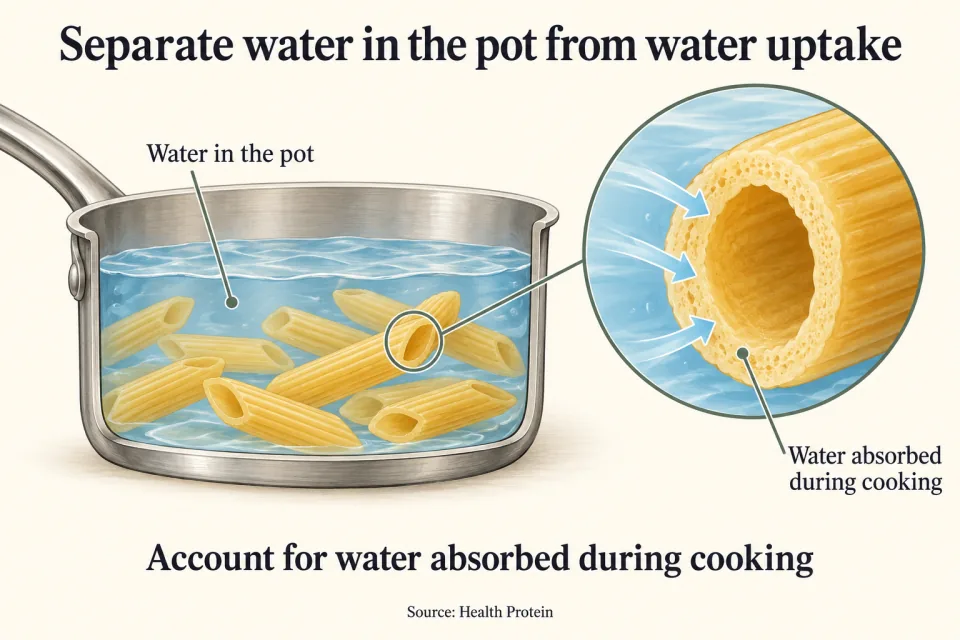
- Cooking changes the weight used as the basis of the comparison. In the Frontiers experiment, cooked spaghetti weighed approximately 2.4–2.6 times its dry weight. The researchers assessed water absorption by relating the increase in weight to the starting uncooked weight.
- That measurement connects the dry batch with the cooked food. A dry-weight comparison starts before water uptake, while a cooked-weight comparison starts after it. When reporting protein per weight of cooked pasta, the relevant food description is the cooked, drained pasta being weighed.
- Montana State University's cooking table describes the cooked yield of wholewheat pasta as variable. A practical comparison can account for this by recording the final cooked weight of each batch. Use the observed batch weights to describe the preparation rather than assigning the experimental spaghetti yield to another pasta.
- For example, prepare wholewheat pasta and refined wheat pasta as separate batches and record each starting weight. After cooking and draining, record each final weight, then weigh matching portions from those batches. This procedure preserves the distinction between how much dry pasta entered the pot and how much cooked pasta appears in the comparison.
- Keep any sauce outside these weighing steps. The resulting record describes plain pasta at the point named in the comparison. It also leaves a clear place to document additions later, when the focus moves from pasta to the finished dish.
Sheet 05 of 08
Separate water in the pot from water uptake
- The quantity of cooking water and the amount absorbed by pasta are separate measurements. The University of Tuscia experiment examined the cooking-water ratio, while the Frontiers experiment calculated absorption from pasta weight gain. Recording these details separately keeps the cooking method distinct from the cooked yield.
- Under the University of Tuscia study's conditions, changing the cooking-water quantity produced no statistically significant differences in the assessed sensory attributes. Those assessments included firmness, stickiness, bulkiness and overall cooking quality. The finding describes the tested preparations and their measured cooking qualities.
- In the same experiment, dry-pasta protein content influenced water uptake more strongly than the cooking-water ratio. This was a finding about water absorption during cooking. Keep it attached to that measurement when explaining the study, rather than presenting it as a ranking of protein in matched cooked portions.
- The Frontiers researchers found no significant difference in water absorption among their spaghetti samples. They also identified semolina characteristics and drying conditions as factors affecting pasta structure and cooking behaviour. Their explanation links higher drying temperatures with a more compact gluten network that limits starch water uptake.
- For a comparison record, give cooking-water quantity, dry weight and final cooked weight separate spaces. These entries describe different parts of preparation. The final weight then supplies the basis for selecting matched cooked portions.
Sheet 06 of 08
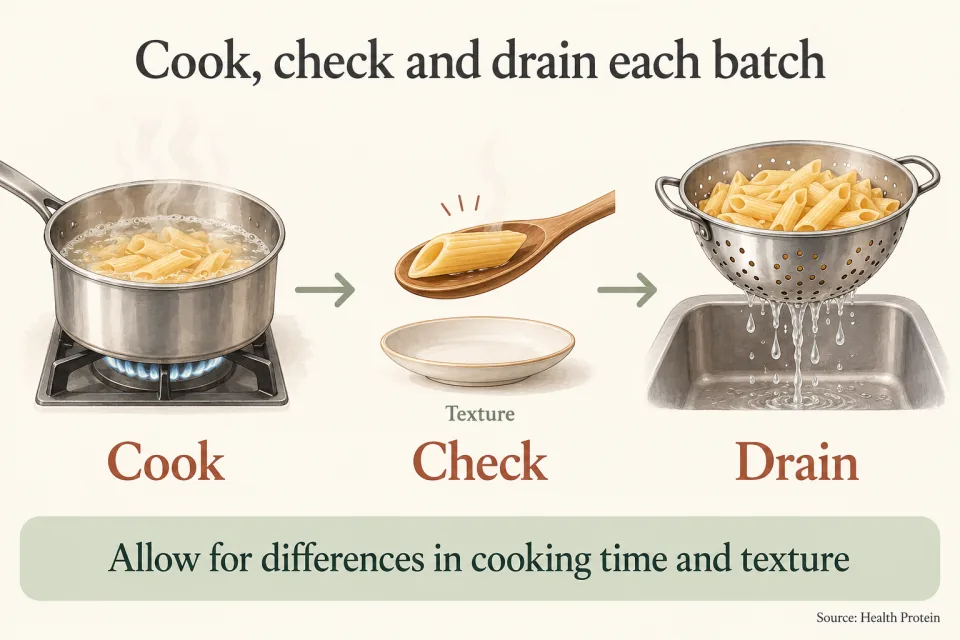
Cook, check and drain each batch
- Cook each pasta to a checked endpoint before weighing the drained batch. Mississippi State University's instructions begin with adding pasta to boiling water. They then describe stirring, checking doneness and draining as parts of the preparation.
- Stir after the pasta begins cooking to help keep the pieces from sticking together. Mississippi State University advises following the cooking time stated on the package. Use the instructions for the pasta being prepared, and include that preparation information in the comparison record.
- Mississippi State University also advises tasting pasta before draining to check that it is cooked but remains slightly chewy. Make that check part of the method for each batch. Record the endpoint in plain terms so the notes describe the pasta as it was weighed.
- Drain the cooked pasta in a colander, as the same instructions describe. For the comparison, use a consistent draining procedure and note what was done. Weigh the drained pasta before mixing in other ingredients, and attach the weight to the corresponding flour description.
- Keep the preparation notes brief but specific. Record the package instructions followed, the doneness check and the draining method. These steps make the comparison understandable to someone who did not watch the cooking.
Sheet 07 of 08
Allow for differences in cooking time and texture
- Cooking time and texture need their own observations in a wholewheat and refined wheat comparison. In the LWT experiment, the whole-grain pasta preparations reached their optimal cooking point sooner than the white-flour preparation. The cooked whole-grain samples were also harder than the white-flour samples in that experiment.
- The researchers prepared white flour and whole-grain flours using different milling methods. Flour composition and milling method affected the distribution of particle sizes. They attributed the shorter optimal cooking times of the whole-grain preparations to bran and germ particles disrupting the gluten matrix.
- Keep those results tied to the tested preparations. Montana State University's cooking table separately describes wholewheat pasta cooking time as dependent on size. Together, these sources give reasons to record pasta size, cooking instructions and the checked endpoint when documenting a comparison.
- For a practical record, describe the texture after cooking rather than using elapsed cooking time as the entire description. Keep the texture observation beside the preparation details. The protein entry can then remain a nutrient measurement, with firmness and chewiness reported as cooking observations.
- Iowa State University notes that whole-grain pasta can replace white pasta in recipes. A recipe substitution can therefore be described separately from a nutrient comparison. Record how the pasta was cooked and used, while keeping the matched-weight nutrition information in its own part of the account.
Sheet 08 of 08
Keep sauces and added protein ingredients separate
- Describe the plain pasta before describing the completed dish. Dietitians of Canada's examples pair linguine with tuna, rotini with chicken and spaghetti with grilled shrimp. These are separate protein ingredients added to the pasta meal.
- For a comparison focused on pasta, weigh and document the cooked pasta before making those combinations. Then describe the added ingredients in a separate recipe record. This keeps the question about the pasta itself distinct from the question about everything served with it.
- Shape also has a role in the recipe. Dietitians of Canada pairs light sauces with delicate pasta such as angel hair, and chunky sauces with sturdier shapes such as fusilli. Record shape and sauce choice as recipe details, alongside the flour type and cooking method.
- Iowa State University describes combining whole-grain and white pasta as a way to introduce different colours and textures. If preparing that combination, keep the separate batch records until the pasta is mixed. Describe the final dish as a mixture and retain the ingredient details that explain its composition.
- A finished comparison can therefore present the plain cooked pasta first, followed by the recipe additions and preparation notes. Keep protein, calories and fibre tied to the food and weight each entry describes. The reader can then distinguish the pasta measurement, the cooking observations and the assembled dish.
Sources for this notice
MyPlate: The grain groupWhole GrainsWhole Grain PastaHow To Make A Healthy Pasta DishInfluence of semolina characteristics and pasta-making process on the physicochemical, structural, and sensorial properties of commercial durum wheat spaghettiCooking quality of commercial spaghetti: effect of the water-to-dried pasta ratioComparison of quality attributes of refined and whole wheat extruded pastaCook Whole Grains and Pasta
Desk file
On file for this notice
- Credited to
- Health Protein
- Backed by
- 8 sources listed above
Short notices on the protein in everyday foods from around the world, from dal, paneer and lentils to eggs, fish, yogurt and quinoa. One food per notice, every number sourced.
About this board · How notices are checked · Health notice · People on this board · Expert panel · Privacy notice · Contact the board · Grievances desk